The integration of advanced artificial intelligence with a next-generation spectroscopic survey telescope will help scientists map the cosmos and solve the universe's greatest mysteries.
The Cosmic Bottleneck
The universe is predominantly composed of dark matter and dark energy, yet their fundamental nature remains one of science's most profound enigmas. Understanding these invisible components is critical for modern physics, but traditional observational tools are hitting a plateau. To map the universe accurately, astronomers must process petabytes of complex, noisy astronomical data—a challenge that classic data processing pipelines struggle to handle efficiently.
To address this monumental challenge, Tsinghua University is pioneering a bold scientific engineering endeavor: combining cutting-edge artificial intelligence with the construction of the Multiplexed Survey Telescope (MUST).
Next-Generation Cosmic Mapping
Scheduled for completion in 2030, the MUST project represents an unprecedented large-scale scientific exploration led by a Chinese university. As a top-tier international spectroscopic survey telescope, MUST is designed to capture the light spectra of tens of millions of galaxies, creating a highly detailed three-dimensional map of the cosmos.
To make sense of the overwhelming volume of data that MUST will generate, Tsinghua researchers have developed novel AI algorithms specifically tailored for high-dimensional cosmological datasets. By utilizing advanced foundation models trained on extensive simulated universes, the AI can automatically identify the subtle gravitational lensing effects and cosmic expansion signatures hidden within the noise.
This machine-learning approach evaluates complex structural variables exponentially faster than traditional computational methods. Because the underlying AI framework is adaptable and does not need to be constantly retrained from scratch for different observation sectors, it dramatically increases the efficiency of the entire optimization and discovery process.
Illuminating the Unknown
The synergy of the MUST telescope's optical hardware and innovative AI software will position Tsinghua at the forefront of global astrophysics. This ambitious initiative promises not only to push the boundaries of large-scale engineering but also to trace the distribution of dark matter halos and measure the repulsive force of dark energy with unparalleled precision.
"Modern AI and machine-learning models can fundamentally change the way scientists analyze complex cosmic systems," says a lead astrophysicist at Tsinghua University. "MUST is more than just a telescope; by merging this world-class spectroscopic hardware with sophisticated AI, we have built a highly reusable engine of discovery that will help us bring the hidden physics of dark matter and dark energy into the light."
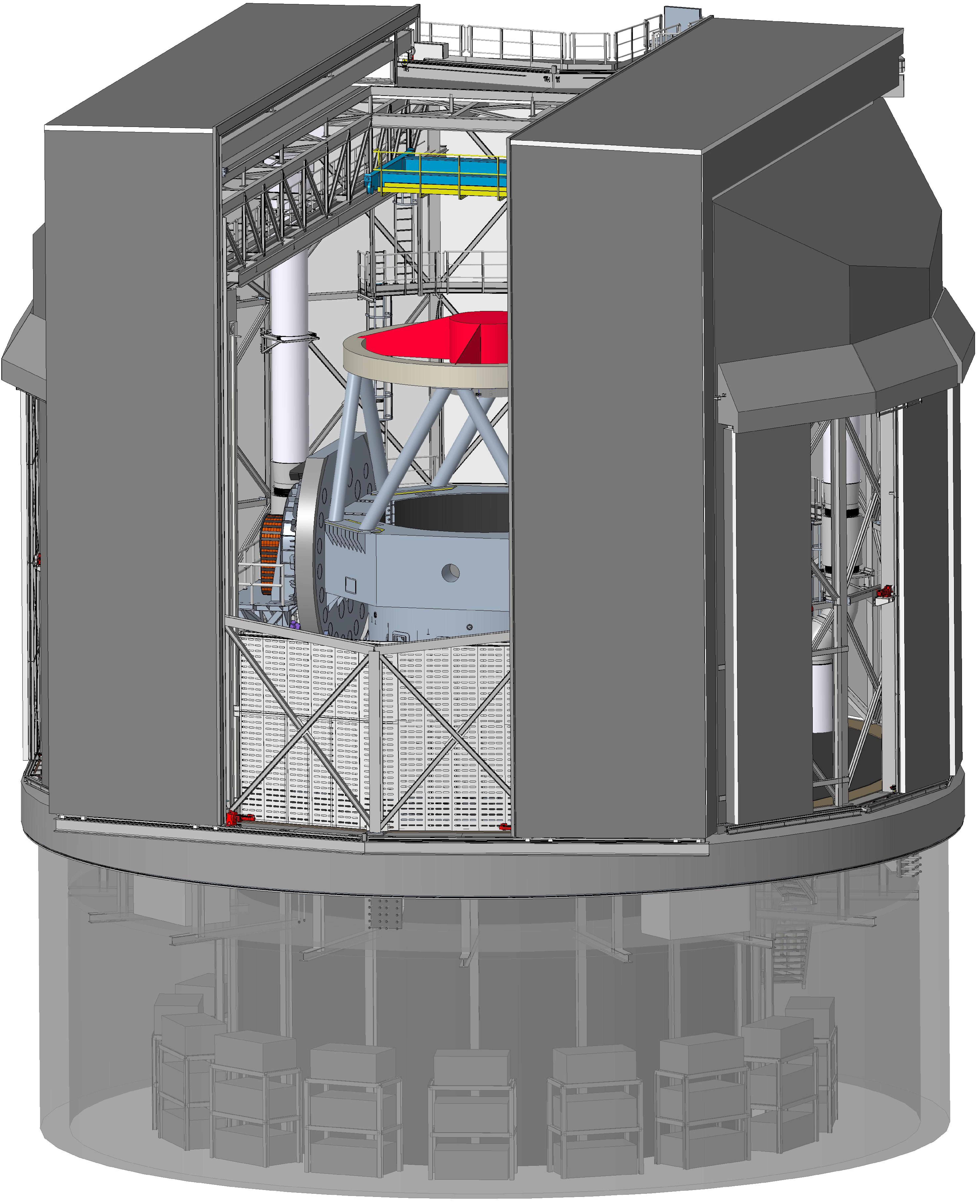
An illustration of the Multiplexed Survey Telescope (MUST) facility, currently under construction and set for completion in 2030. Credit: Tsinghua University
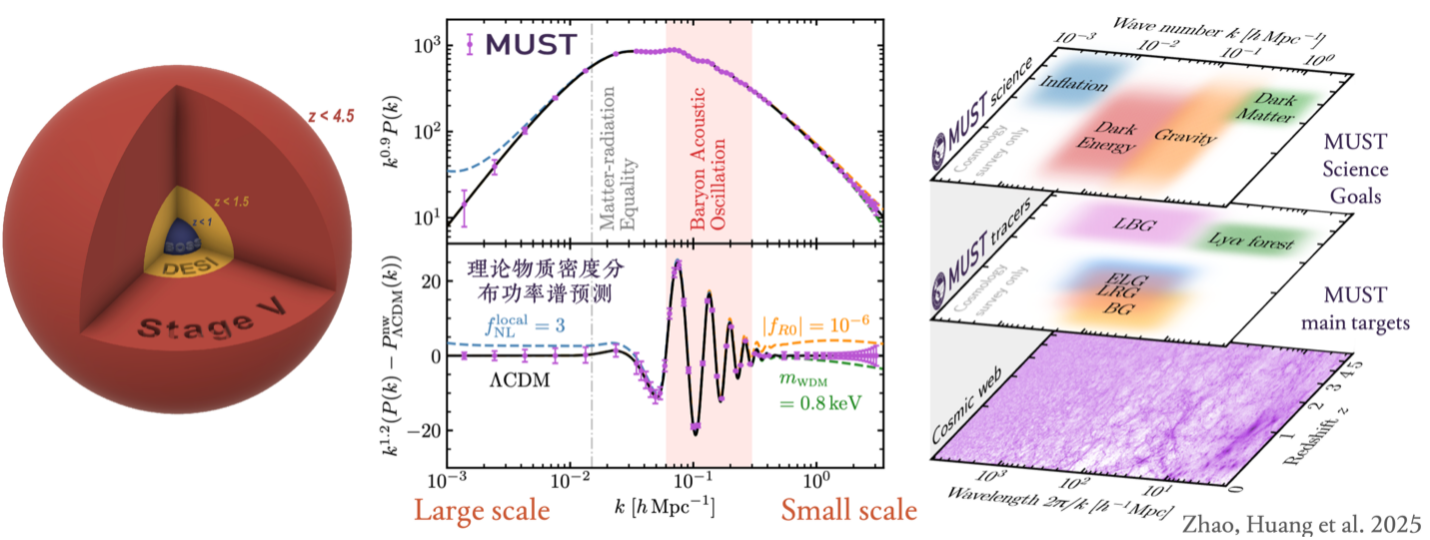
A data visualization of a simulated dark matter halo network, optimized and processed using the team's advanced AI foundation models. Credit: Tsinghua University
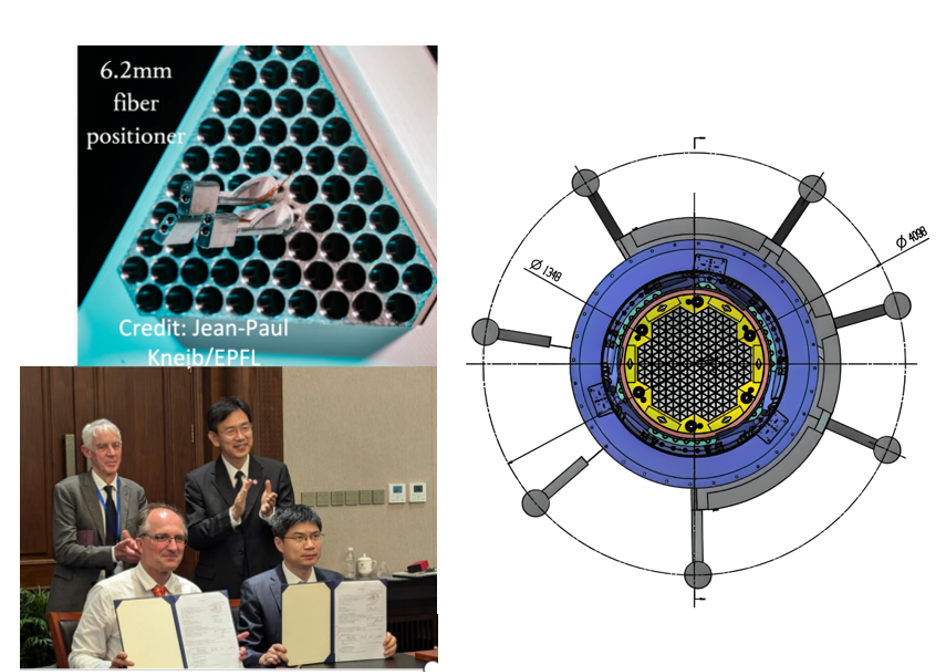
EPFL joined MUST as a founding partner and will be responsible for the MUST fiber positioner. Credit: Tsinghua University
Read the full paper:
arXiv: 2411.07970v3