Metasurface-generated tweezer arrays trapping atom arrays with 10,000 atoms, a millimeter-scale high-cooperativity optical cavity, and an efficient atom rearrangement algorithm – with these three breakthroughs, Tsinghua takes on the challenge of universal fault-tolerant quantum computing using atom arrays.
Universal fault-tolerant quantum computing is widely considered the most formidable challenge in quantum technology. Among the many hardware approaches now under development, atom array quantum computing, building on decades of progress in cold atom physics, has emerged as one of the most promising routes toward scalable, fault-tolerant quantum machines.
Now, a team at Tsinghua has reported a series of advances that could help move this platform significantly closer to that goal. The researchers have recently achieved single-qubit and two-qubit gate fidelities of 99.95% and 99.5%, respectively. These results surpass the threshold required for quantum error correction and place the team among the world’s leading teams in the field. They have also developed the world’s only millimeter-scale optical cavity system that can simultaneously accommodate more than 100 atomic qubits while maintaining a cooperativity greater than 100, enabling fast and accurate readout of multiqubit quantum states.
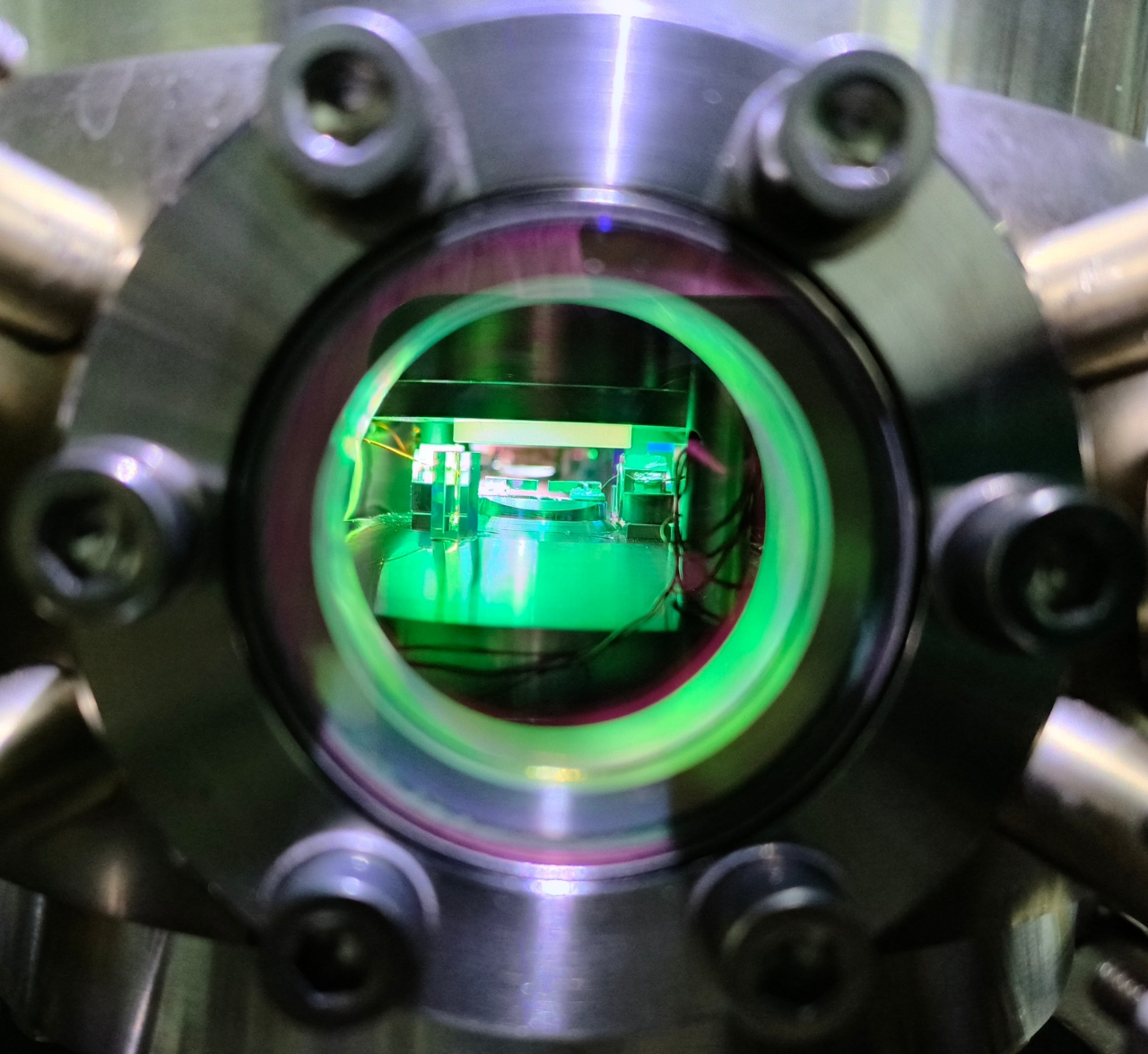
An optical cavity with a 1.66 mm cavity length and cooperativity greater than 100 was installed in the vacuum system. Credit: Tsinghua University
The team has also developed a set of hardware and software innovations to scale up the system. They have projected a few tens of thousands of high-quality optical tweezers with a single metasurface, laying the hardware foundation for an atom array containing more than 10,000 atomic qubits. This capability enables them to capture 10,064 individual atoms recently, the first time to reach 10,000-physical-qubit scale among all quantum computing platforms. The work was highlighted by Physics World, a leading publication of the Institute of Physics in the United Kingdom. They have also developed AI-based control algorithms that enable rapid manipulation of atom arrays at the 10,000-atom scale, including defect-free rearrangement and the encoding of large qubit error-correcting codes.
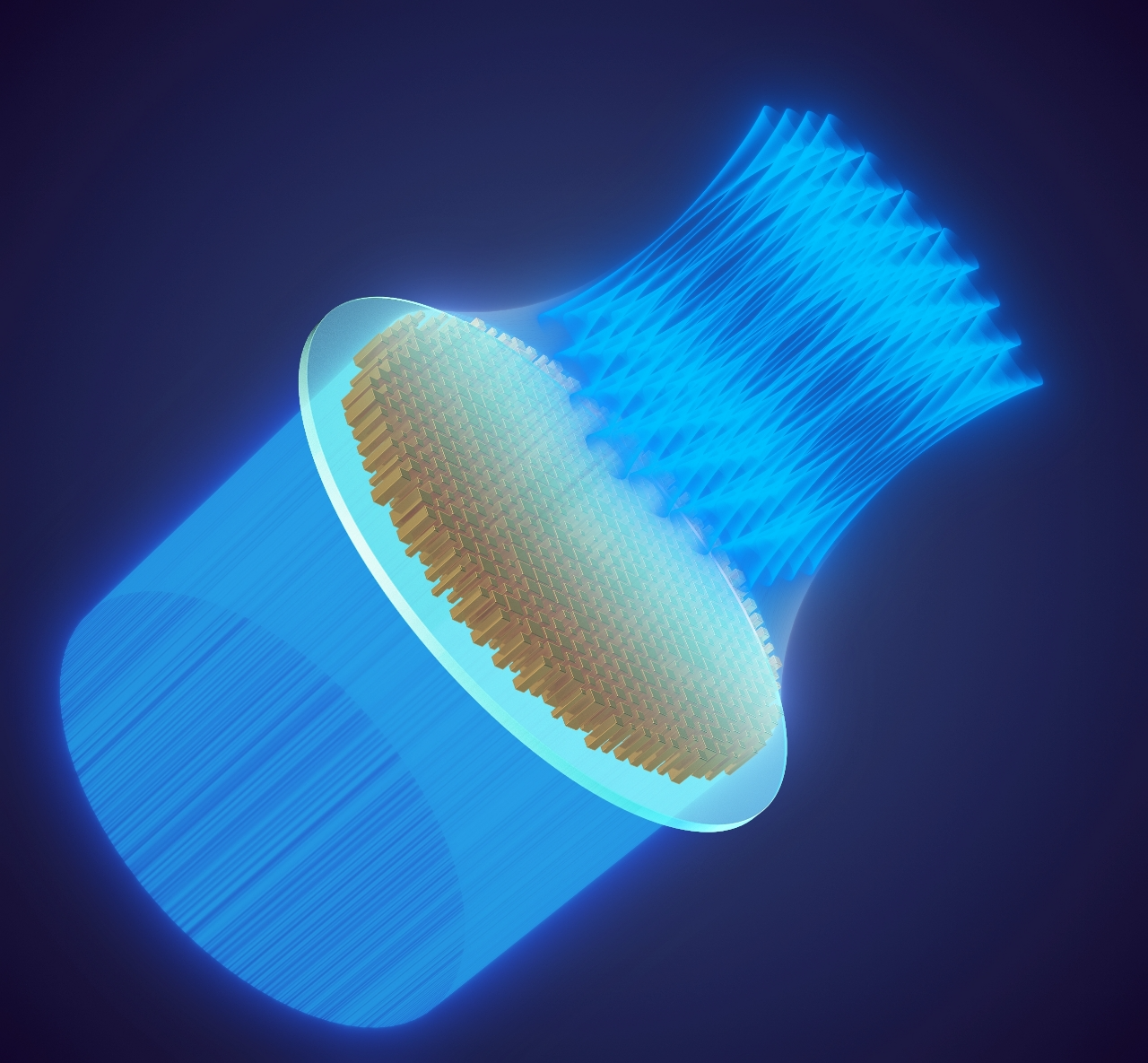
Single metasurface generates up to 78,400 optical tweezers. Credit: Tsinghua University
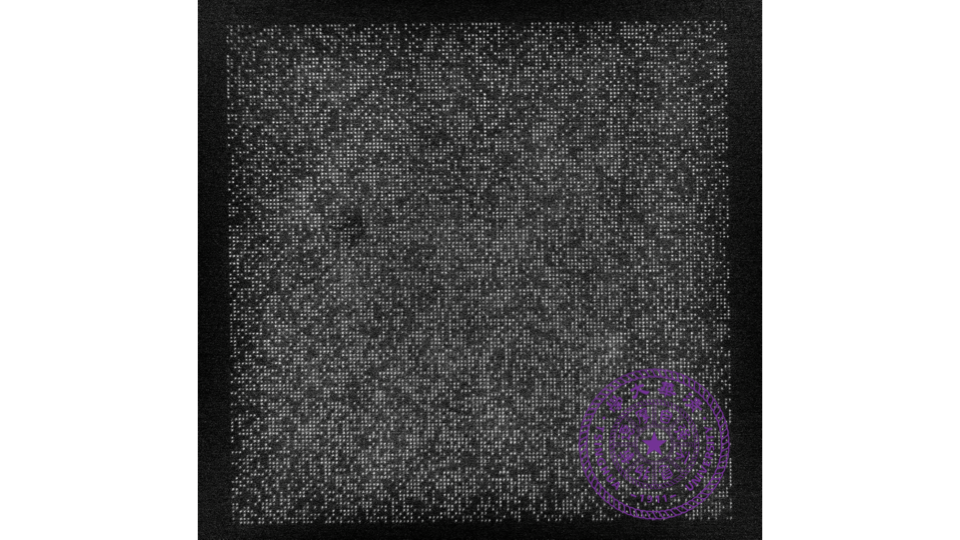
Generating large-scale optical tweezers and trapping 10,064 single atoms with a single optical metasurface. Credit: Tsinghua University
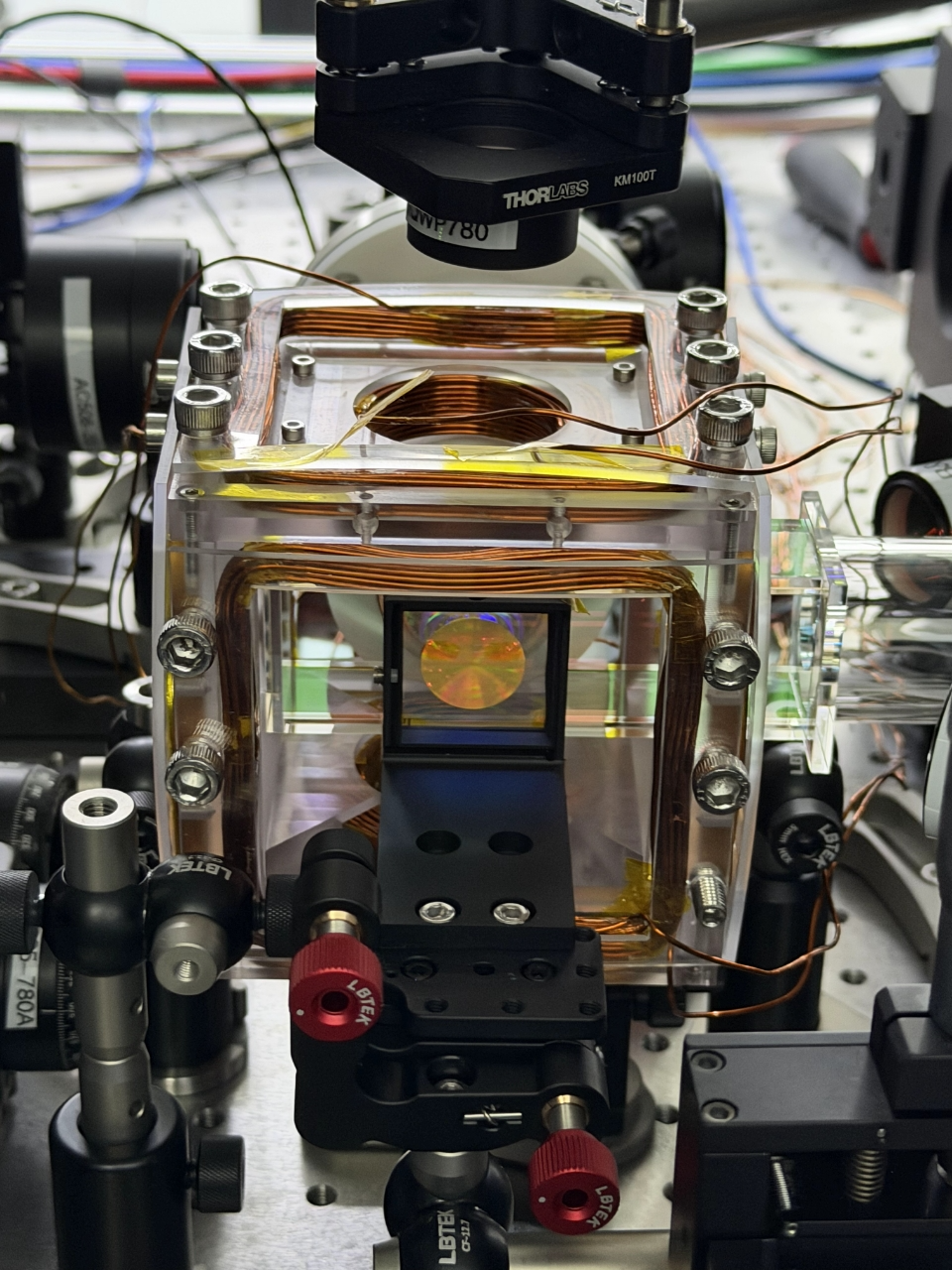
Optical metasurface mounted on the vacuum system, demonstrating the loading of atom arrays at the 10,000 scale. Credit: Tsinghua University
"With this series of hardware and software innovations, we can achieve high-fidelity computation and measurement, and are now able to trap and control atomic qubits on the 10,000 scale," says Professor Hui Zhai. "These capabilities give us confidence to tackle quantum error correction on the atom array platform, which is arguably the hardest step in quantum computing. It is also the final barrier on the road to practical quantum computing."
The Tsinghua team’s ability to achieve these breakthroughs in a relatively short time is rooted in more than a decade of sustained work in fundamental cold atom physics research. Professor Zhai has made several internationally recognized contributions to cold atom theory, and his book Ultracold Atomic Physics, published by Cambridge University Press, has been well received by researchers in the field.
Beyond academic efforts, the group has also incubated the quantum computing startup Qosmos, which focuses on system-level engineering and the development of upstream components and downstream applications. Together, the Tsinghua team and Qosmos have established a full-stack research and development chain spanning basic science, technological innovation, and engineering translation, with the shared goal of advancing universal fault-tolerant quantum computing.
As quantum computing moves from proof-of-concept demonstrations toward practical implementation, the ability to combine large-scale qubit generation, high-fidelity gate operations, intelligent control, and efficient readout will be critical. The Tsinghua team believes that its integrated advances across these areas position the atom array platform as a strong contender in the global race toward practical, fault-tolerant quantum computing.