Recently, Professor Lu Xi's research group from the School of Environment and the Institute for Carbon Neutrality at Tsinghua University, in collaboration with researchers from the University of Michigan, Stanford University, Peking University, the Chinese Academy of Environmental Planning, The Hong Kong Polytechnic University, and other institutions, published a comprehensive review on the assessment and realization of global rooftop solar photovoltaic potential.
The review systematically examines major methods, key findings, and emerging challenges in rooftop solar PV potential assessment. It argues that future research and policy planning should move beyond the question of “how much technical potential exists” toward a more integrated understanding of “how much rooftop solar PV is economically viable, system-deployable, and practically effective in supporting low-carbon energy transitions.”
Rooftop solar PV is an important pathway for promoting power-sector decarbonization and clean energy transitions in buildings. Compared with utility-scale solar PV, rooftop systems can make use of existing building space, generate electricity close to demand centers, reduce land-use pressure, lower the need for long-distance transmission, and enhance energy resilience on the user side. However, rooftop solar PV potential cannot be determined solely by rooftop area or solar radiation resources. Its actual deployment is shaped by building morphology, rooftop obstructions, installation standards, user load profiles, electricity tariff structures, financing conditions, distribution-grid hosting capacity, and operational flexibility.
The review first summarizes the evolution of methods used to estimate rooftop solar PV technical potential. Early studies often relied on statistical approaches to infer rooftop area from aggregate data. These methods are useful for rapid large-scale assessment but have limited ability to capture building-level heterogeneity and fine-scale rooftop constraints. Later approaches used building footprints, three-dimensional elevation data, aerial imagery, and deep-learning models to identify rooftop structures more accurately at urban and regional scales. More recently, machine-learning-based gridded methods have improved the comparability of national and global assessments.
The authors point out that differences in data sources, spatial resolution, and rooftop availability assumptions can substantially affect technical-potential estimates. As assessment methods have shifted from statistical extrapolation toward high-resolution remote sensing and machine-learning approaches, reported estimates of rooftop solar PV technical potential have generally increased.
At the global scale, existing studies indicate that rooftop solar PV has substantial technical potential. When standardized under consistent assumptions, global rooftop solar PV could generate approximately 17–22 PWh of electricity annually, equivalent to about 56%–71% of current global electricity demand. However, the review emphasizes that technical potential represents only an upper bound. Rooftop PV potential varies significantly across countries, cities, and building types due to differences in building density, rooftop form, urbanization stage, electricity demand structure, and solar resources. In rapidly urbanizing regions, changes in building stock and urban form also make rooftop PV potential highly dynamic.
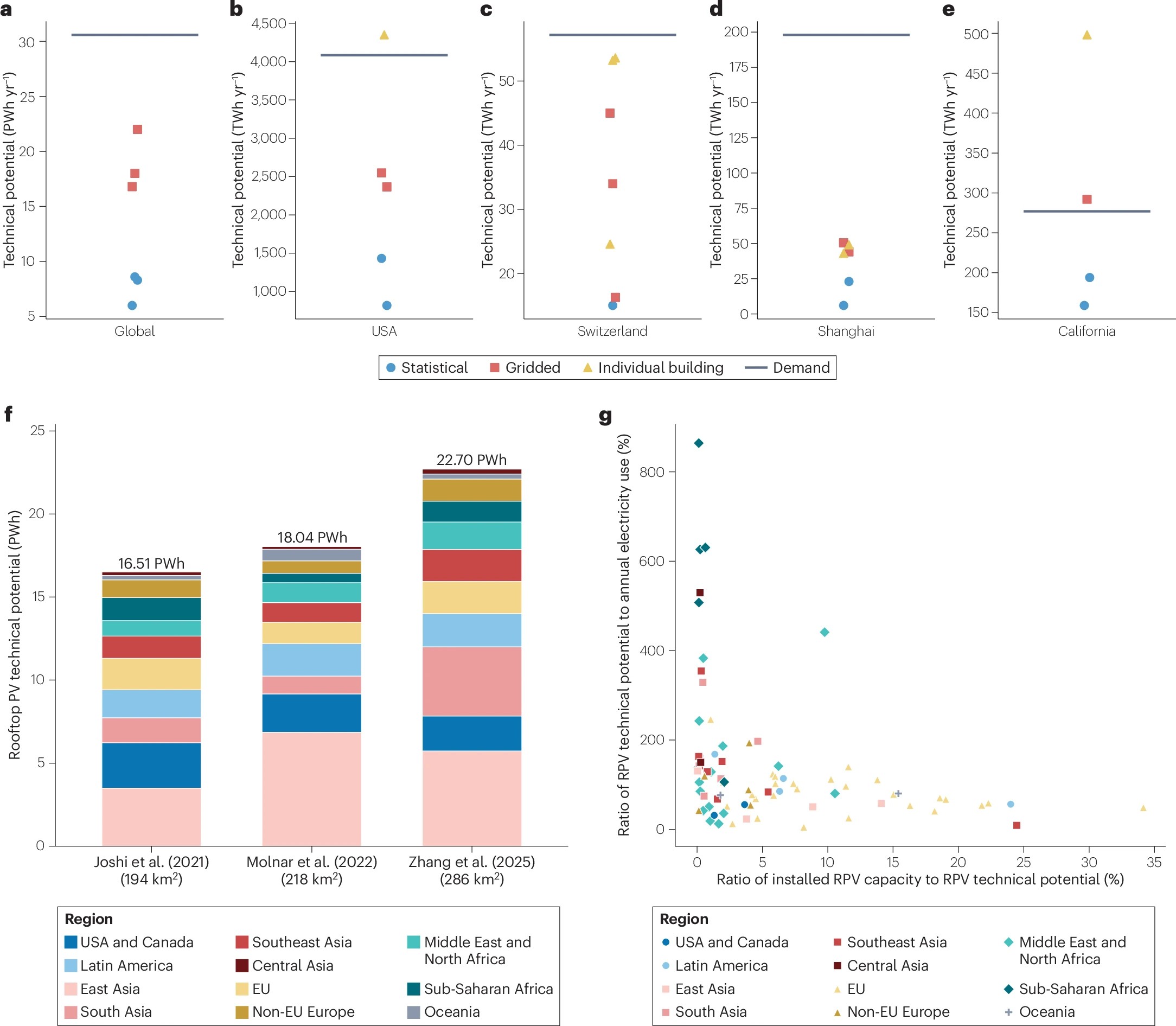
Fig. 1: Estimates of global and regional RPV technical potential.
The review further calls for a shift from technical-potential assessment to economic and deployable-potential assessment. Economic potential refers to the portion of technical potential that is financially viable under specific cost, financing, electricity price, and revenue conditions. As PV module costs have declined, rooftop solar PV has approached or achieved grid parity in many regions. Yet in high-solar systems, changes such as the transition from net metering to net billing, declining or even negative midday wholesale electricity prices, and dynamic retail tariffs may shift the focus from maximizing rooftop installation area to optimizing PV capacity together with user demand, battery storage, and other flexibility resources. Therefore, economic potential should not be treated as a fixed fraction of technical potential, but rather as a dynamic quantity shaped by technology costs, electricity markets, policy design, and user behavior.
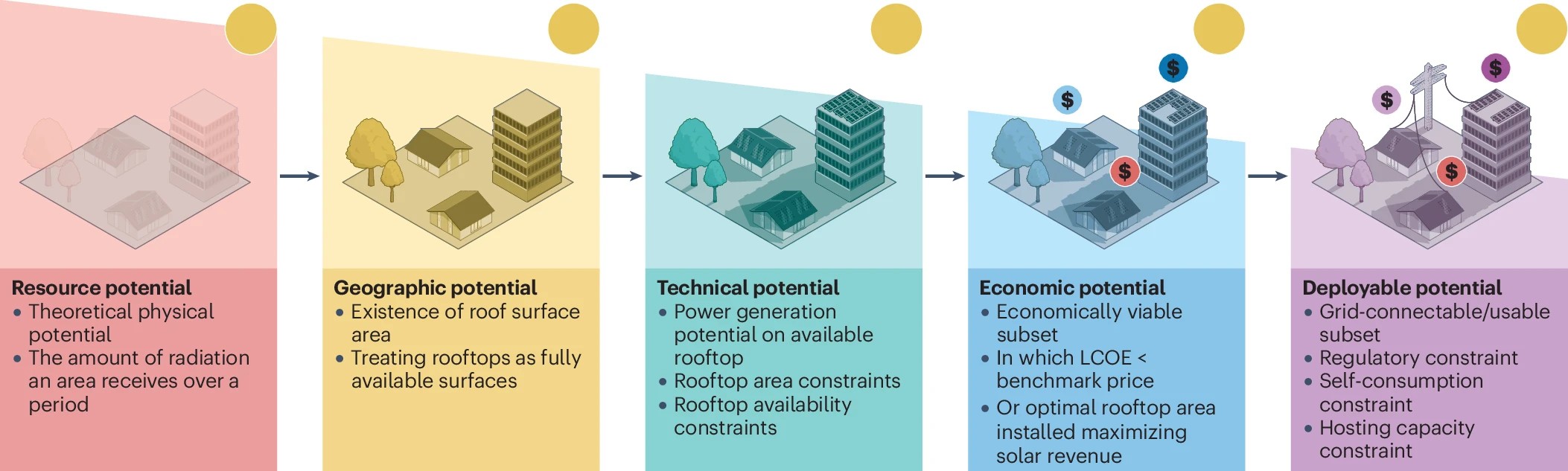
Fig. 2: Different RPV potentials based on factors considered.
Deployable potential further accounts for practical constraints such as distribution-grid hosting capacity, export limits, self-consumption requirements, voltage regulation, user financing capacity, and regulatory rules. Under high rooftop PV penetration, distribution networks may face voltage violations, reverse power flows, thermal overloads, and local curtailment risks. As a result, rooftop resources that are technically and economically feasible may still be difficult to connect to the grid. The review highlights that future rooftop PV planning should be coordinated with distribution-grid upgrades, behind-the-meter storage, demand response, and flexible operation.
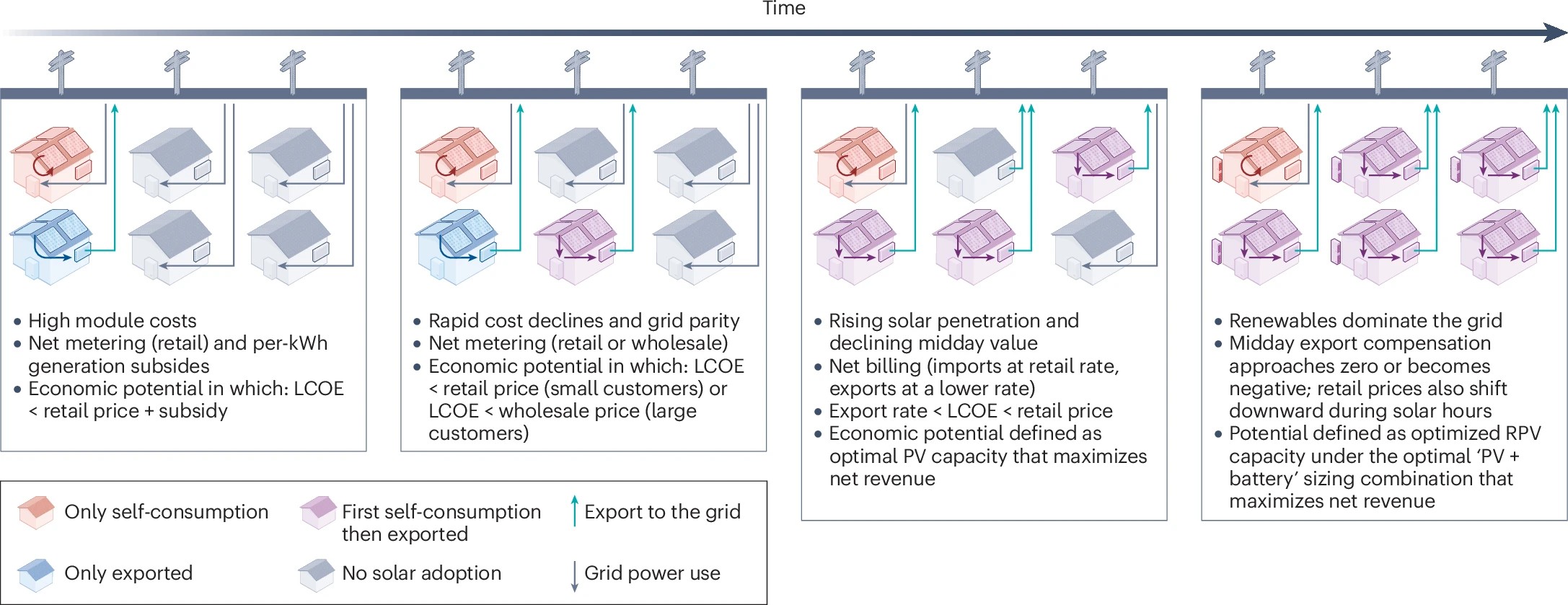
Fig. 3: Evolution of RPV economic potential under changing technology costs, tariff structures and grid conditions.
Beyond electricity generation, the review also discusses the carbon-mitigation potential of rooftop solar PV. Traditional assessments often estimate avoided emissions by multiplying PV generation by average or marginal grid-emission factors. However, this approach may not capture substitution effects, curtailment, market dynamics, or long-term changes in power-system investment. As power systems continue to decarbonize, the actual climate benefits of rooftop PV will depend on when and where the electricity is generated, which generation sources it displaces, and whether it affects the deployment of other low-carbon resources. The authors therefore call for closer integration between rooftop PV assessment, power-system planning models, market simulations, and carbon-constrained scenarios.
The review also identifies four major categories of barriers that limit the realization of rooftop PV potential: socioeconomic and institutional barriers, power-system integration challenges, environmental and reliability concerns, and competition between rooftop PV and other urban rooftop functions. To bridge the gap between technical potential and practically achievable deployment, the authors recommend reducing soft costs, improving equitable financing mechanisms, optimizing dynamic tariffs and export rules, expanding distribution-grid hosting capacity, developing storage and flexibility resources, and advancing building-integrated PV and lightweight PV technologies.
The study emphasizes that the future development of rooftop solar PV is not only a question of “how much can be installed,” but also of how to enable high-quality deployment under conditions that are equitable, reliable, economically sound, and compatible with power-system operation.
The review article, titled “Rooftop solar PV potentials: from technical to deployable,” was published in Nature Reviews Clean Technology. Dr. Shi Mai, a postdoctoral research fellow at the School for Environment and Sustainability, University of Michigan and a 2024 graduate of Tsinghua University’s School of Environment, is the first author. Professor Lu Xi from Tsinghua University’s School of Environment and Institute for Carbon Neutrality is the corresponding author.
Other co-authors include Wu Haochi from Stanford University, Wang Zhecheng from Peking University, Ruan Ziwen from the Chinese Academy of Environmental Planning, Aviad Navon from the University of Michigan, Jing Renzhi from Google, Li Chaojun from the State Key Laboratory of Regional Environmental Security, and Li Xinjie from Tsinghua University. The study also received important guidance from Professor Yan Jinyue of The Hong Kong Polytechnic University, Chen Wei from the Center of Science and Technology & Industrialization Development of the Ministry of Housing and Urban-Rural Development, Professor Liu Xiaohua, Assistant Professor Liu Xiaochen and Academician Jiang Yi from Tsinghua University's School of Architecture, Academician He Kebin from Tsinghua University’s School of Environment, and Professor Michael T. Craig from the University of Michigan.
Paper link:
https://doi.org/10.1038/s44359-026-00179-w