On November 3, the AI Open Alliance Forum on Academic Frontiers was held under the theme "When Carbon-based Intelligence Meets Silicon-based Intelligence" at the Hong Kong University of Science and Technology (HKUST) as part of the 2026 World Class University Presidents Forum.
The forum was attended by Nancy Ip, president of HKUST and vice chair of the AI Open Alliance; Liu Changsheng, president of Chongqing University; Tom Luo, executive dean of the Shenzhen Loop Area Institute; Li Nan, vice president of the China Association of Higher Education and chairman of the University Council of Beijing University of Chemical Technology; Guo Yike, provost of HKUST; Charles W. W. Ng, vice-president for Institutional Advancement at HKUST; Wang Hongwei, vice president of Tsinghua University; and Irwin King, pro-vice-chancellor (education) of the Chinese University of Hong Kong, among others.
Nancy Ip, Li Nan, and Wang Hongwei delivered opening remarks, while Charles W. W. Ng gave the closing remarks. Their speeches highlighted the importance of advancing interdisciplinary AI research, nurturing young talent, and strengthening international academic collaboration.
The forum also marked the launch of the Global Collegiate Artificial Intelligence Challenge (GAIC), with Tom Luo introducing the competition. Another highlight was the release of “Top Five AI Technologies Shaping the Future: Young People's Picks for 2026,” an initiative organized by the Tsinghua University Graduate Students' Association.
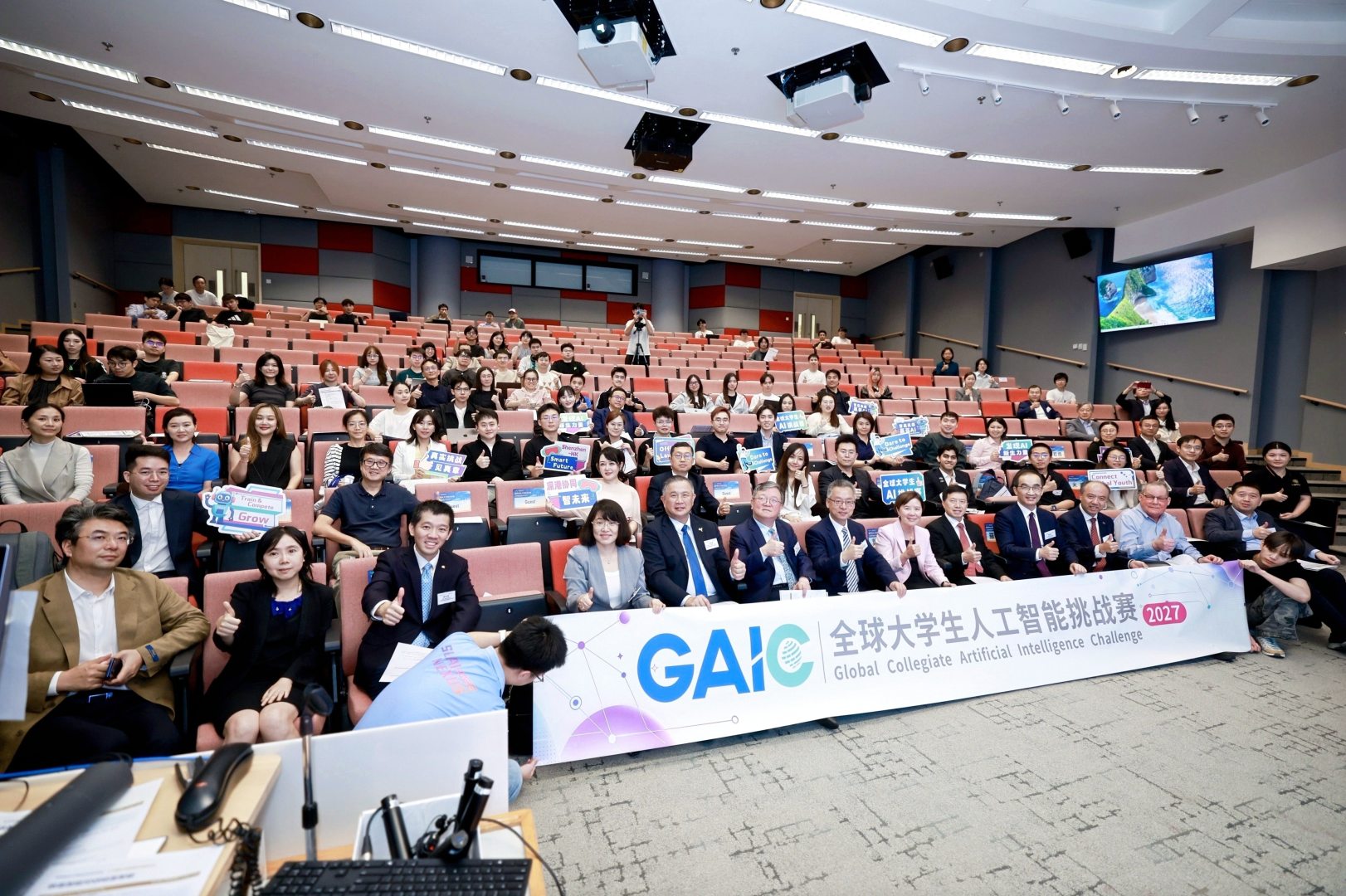
The Global Collegiate Artificial Intelligence Challenge is launched on the sidelines of the AI Open Alliance Forum on Academic Frontiers.
The keynote session was moderated by Wang Hongwei. The talks covered the intersection of brain science and AI, as well as AI's role in higher education. Guo Yike delivered a keynote titled "Artificial Intelligence Empowers the Future Development of Higher Education", exploring new opportunities for education and talent development in the AI era.
The early-career researcher session was moderated by Shi Songhai, member of the Chinese Academy of Sciences and dean of the School of Life Sciences at Tsinghua University. Five young researchers shared their latest work on AI-driven brain research, foundation models for neuroscience, brain-inspired AI, and embodied intelligence, highlighting the growing connections between AI and life sciences.
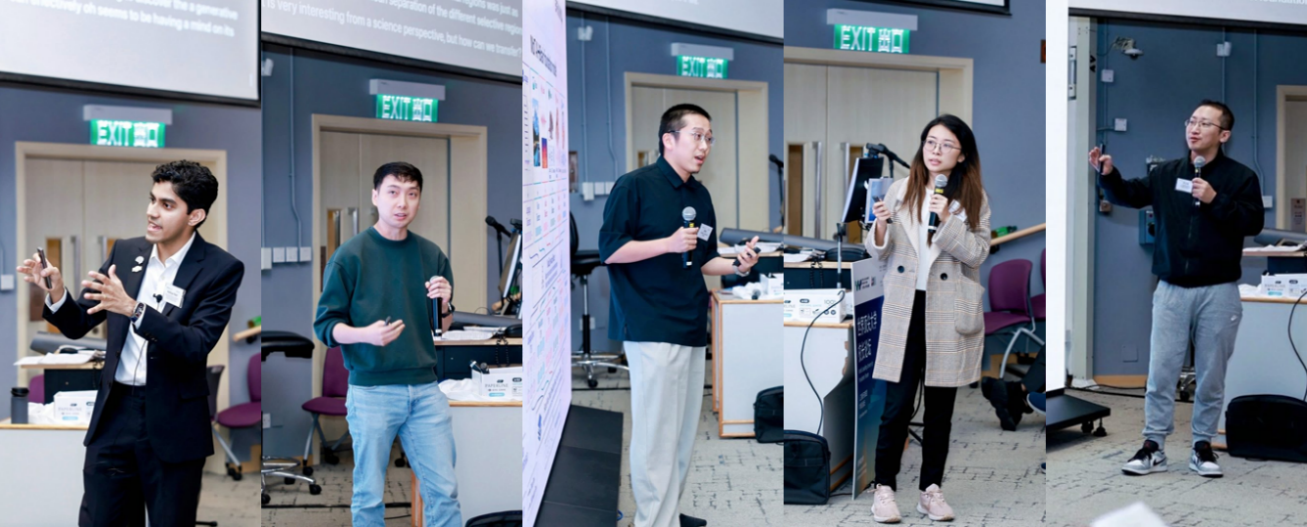
Researchers present their latest work during the Early-career Researcher Session.
In the roundtable discussion, titled “When AI Learns Fast, How Should Humans Learn Smarter?”, young scholars and industry representatives discussed essential human skills in the AI era, interdisciplinary education, critical thinking, hands-on learning, and the qualities that will define future talent.
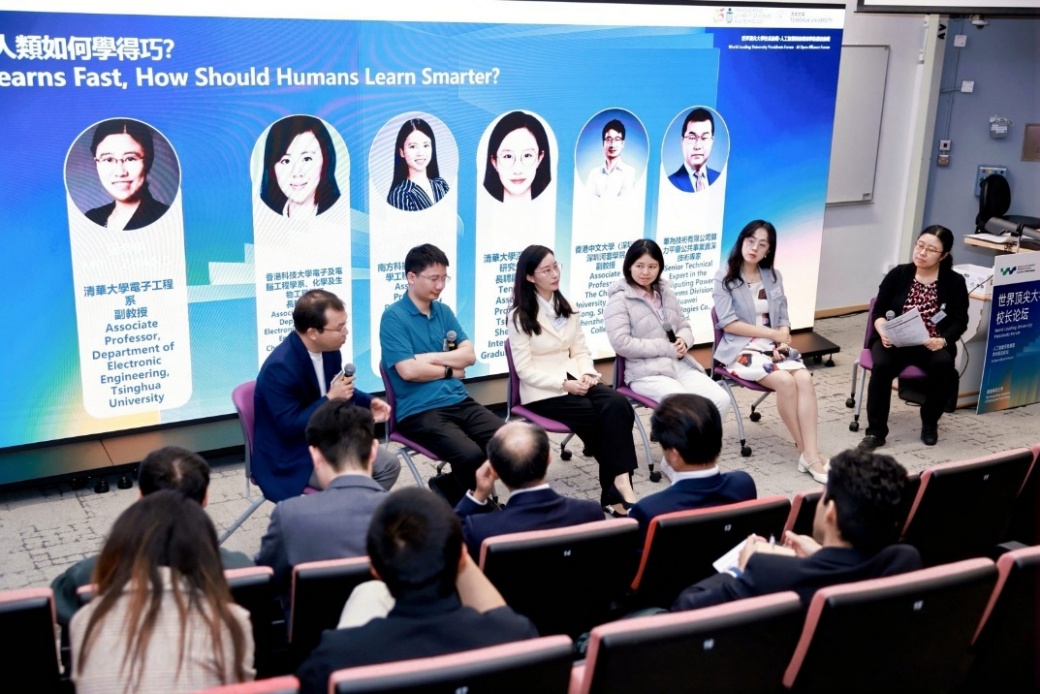
Speakers share perspectives during a roundtable discussion.
Founded in December 2025 by 17 universities and eight companies and research institutions, the AI Open Alliance is chaired by Tsinghua University, which also hosts its secretariat. The forum was organized by the AI Open Alliance and hosted by HKUST and Tsinghua University, and co-organized by Tsinghua Shenzhen International Graduate School, the School of Life Sciences, Tsinghua University; the Office of Mainland Affairs, HKUST; and the Academy of Interdisciplinary Studies, HKUST. The forum, which attracted over 100 participants, marked another step in the Alliance's efforts to advance AI research, support interdisciplinary collaboration and young talent development, and strengthen international partnerships.
Editors: Li Han, John Paul Grima