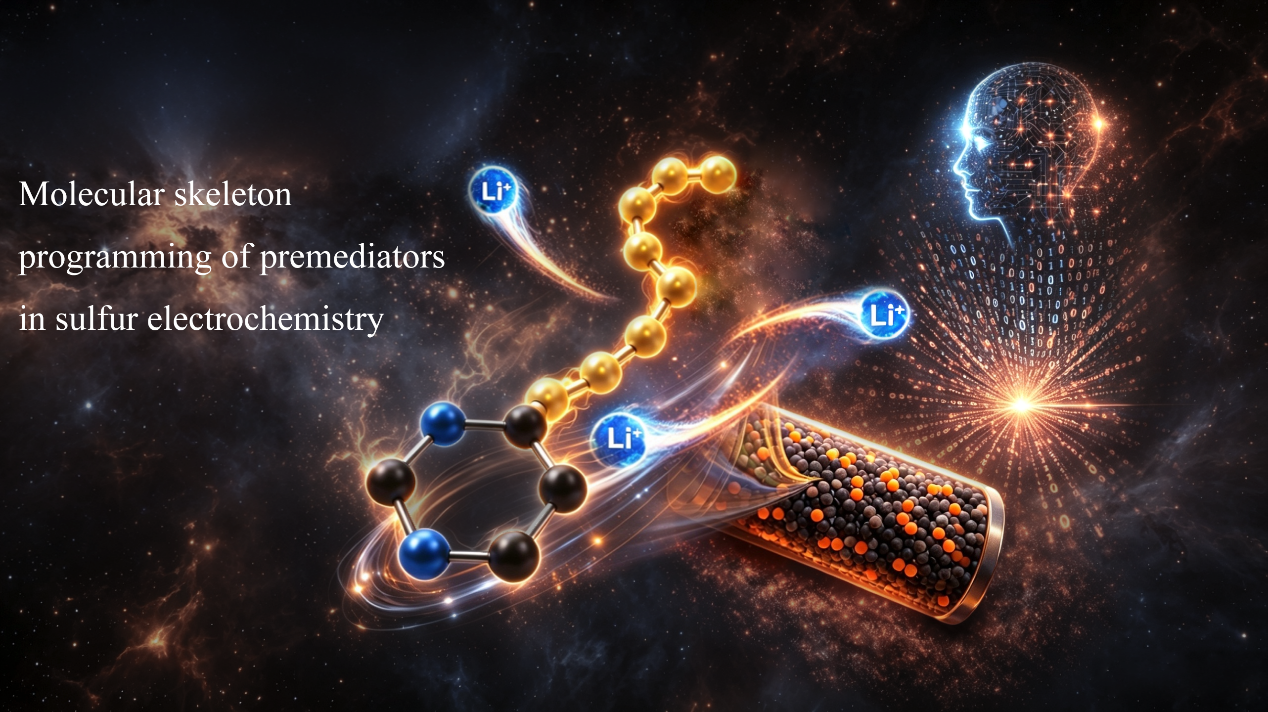
A research team at Tsinghua Shenzhen International Graduate School (Tsinghua SIGS) has developed a new approach to significantly boost the energy density of lithium-sulfur batteries, potentially enabling drones and other low-altitude aircraft to achieve much longer flight times on a single charge. Their findings were published on May 6, 2026, in Nature under the title "Molecular skeleton programming of premediators in sulfur electrochemistry."

Most conventional drones currently rely on lithium-ion batteries, which are approaching their energy density limits. Their energy density – the amount of power stored per unit of weight – typically falls below 300 watt-hours per kilogram, leading to the "range anxiety" that restricts flight duration.
Lithium-sulfur batteries are considered a promising alternative due to their high theoretical energy density, as well as the abundance and low cost of sulfur. However, in practice, these batteries have faced a major hurdle: during charging and discharging, sulfur undergoes a complex chemical process that generates soluble intermediates known as polysulfides. These intermediates tend to drift away, slow down reactions, and waste energy.
To address this challenge, a team led by Associate Professor Zhou Guangmin at Tsinghua SIGS has proposed an original concept called the "premediator" for sulfur electrochemistry.
"Think of it as a special additive that sleeps inside the battery until it is needed. When the sulfur reaction starts, the additive wakes up right where the action is and begins to work," Zhou explained.
Once activated by polysulfides, the premediator forms low-solubility clusters through dynamic molecular coordination, confining the intermediates near the positive electrode and opening fast charge-transfer pathways. This transforms the conventional sulfur conversion pathway into a highly efficient "highway" for electrochemical reactions.
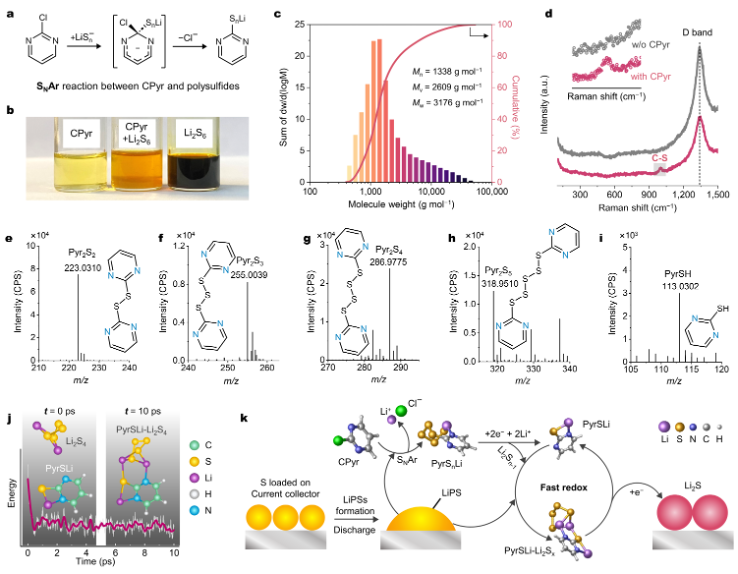
Fig 1. In situ activation of 2-chloropyrimidine-based premediators at the front line of polysulfide conversion reactions
The team further developed an intelligent molecular skeleton programming strategy combining quantum chemistry and machine learning. From 196 candidate molecules, the team identified 4-trifluoromethyl-2-chloropyrimidine as the optimal premediator.
"Building a functional molecule is like playing with building blocks," said Gao Runhua, a 2023 Ph.D. student at Tsinghua SIGS. "The molecular skeleton is the base, and side-chain groups are the blocks. Their type, size, and position all affect the final function."
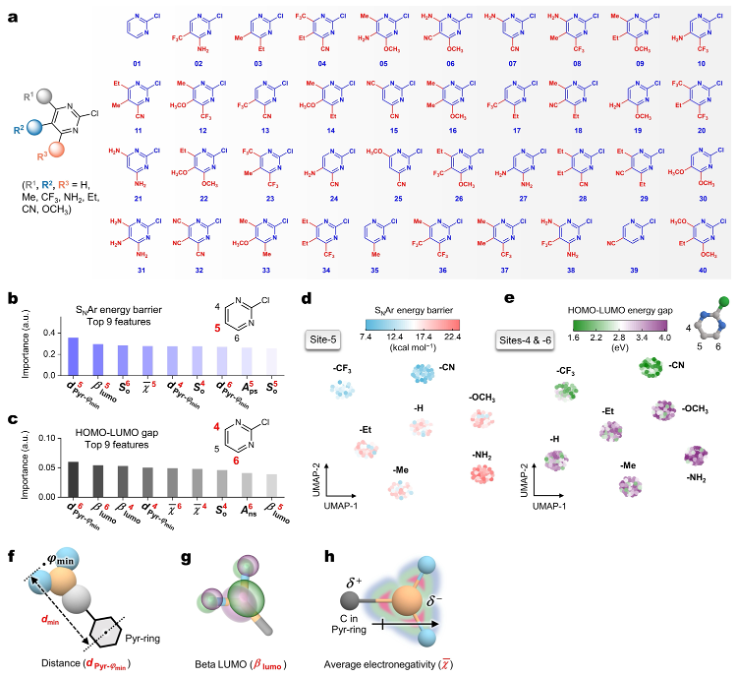
Figure 2. Database construction and feature engineering analysis of 2-chloropyrimidine-based premediators
Zhu Yifei, a 2023 master's student at Tsinghua SIGS, played a key role in integrating computational chemistry and machine learning, as well as analyzing the underlying mechanisms, while Gao Runhua led the experimental work.
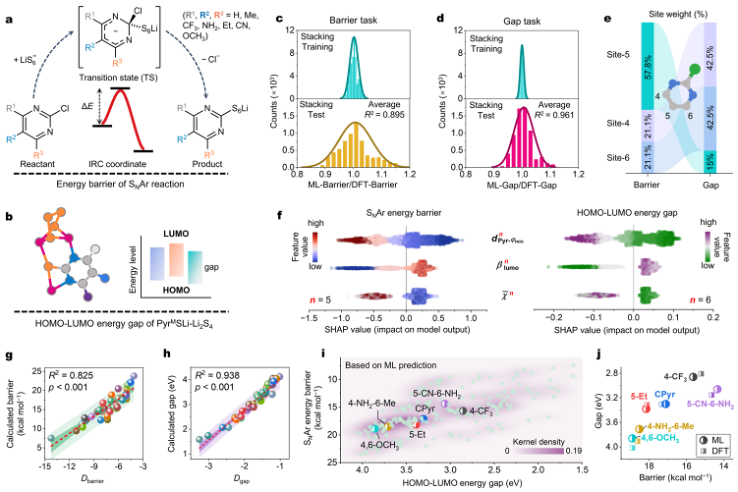
Fig 3. Intelligent molecular skeleton programming for designing 2-chloropyrimidine-based premediators in sulfur electrochemistry
The resulting lithium-sulfur battery demonstrated excellent stability over 800 charge-discharge cycles and achieved an energy density of 549 watt-hours per kilogram in a 14.2-Ah-level pouch cell – nearly double the energy density of many standard drone batteries currently in use.
"For drones, this matters a lot," Zhou said. "Higher energy density means longer flight times, bigger payloads, and more working range. A delivery drone could fly farther to drop off packages. A power line inspection drone could cover more towers in one go. A search-and-rescue drone could stay in the air longer when every minute counts."
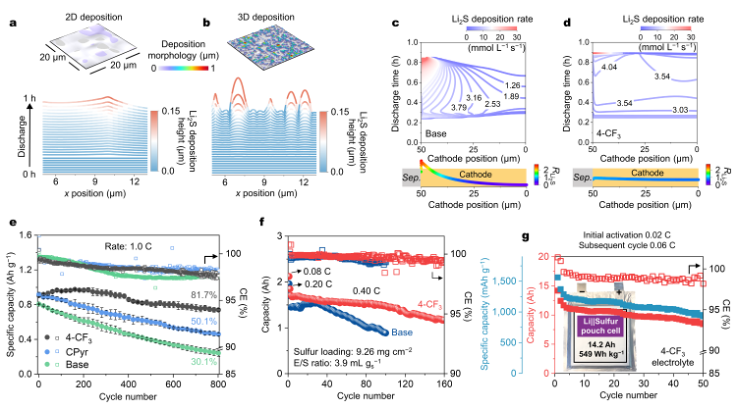
Fig 4. Electrochemical performance of lithium-sulfur batteries based on the optimized 4-trifluoromethyl-2-chloropyrimidine premediator
The team believes their molecular skeleton programming strategy can be extended to other fields, including organic flow batteries, lithium-metal batteries, and even direct battery recycling processes, contributing to the high-quality development of the new energy industry.
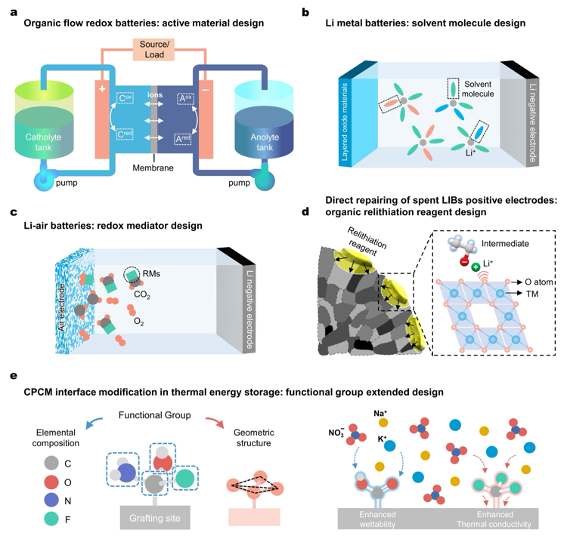
Fig 5. Potential applications of the intelligent molecular skeleton programming strategy in organic flow batteries, lithium-metal batteries, lithium-air batteries, direct recycling of spent lithium-ion batteries, and interface design of composite phase change materials
Gao Runhua and Zhu Yifei are the co-first authors of the paper, and Zhou Guangmin is the corresponding author. The co-authors also include Tao Shengyu (Ph.D. class of 2025), Han Zhiyuan (Ph.D. class of 2024), Zhang Mengtian (Master's class of 2024), Lao Zhoujie and Song Yanze (Master's class of 2025), Song Linxuan (Ph.D. candidate enrolled in 2024), as well as postdoctoral researcher Li Hongtai and assistant researcher Zhu Yanfei, all from Tsinghua SIGS.
The research was supported by several national and regional funding agencies, including the Ministry of Science and Technology, the National Natural Science Foundation of China, the Shenzhen Science and Technology Program, and the Guangdong Innovative and Entrepreneurial Team Program.
Full article: https://www.nature.com/articles/s41586-026-10505-8
Sources: Tsinghua SIGS, Xinhua
Editor: Li Han