On May 12, a parallel session of the 2026 World Digital Education Conference was held in Hangzhou. The session, themed “Building New Scientific Research Capabilities: Transforming Research Paradigms with AI,” aimed to promote the integration of artificial intelligence into scientific research, strengthen interdisciplinary talent development, and produce high-level scientific intelligence outcomes, providing a high-level platform for exchanges that shape a new AI-driven research ecosystem. More than 170 representatives from 128 education departments, universities, research institutions, and companies across 16 countries and regions attended the session.
The session was guided by the Department of Science, Technology and Informatization of the Ministry of Education and organized by the Artificial Intelligence Open Alliance and Westlake University. The session featured keynote speeches, a young scientist forum, a roundtable discussion, and research highlights. Leading experts and industry pioneers in the field of AI for Science were invited to showcase the latest intelligent research tools and outcomes, jointly exploring innovative pathways for transforming research paradigms through artificial intelligence.
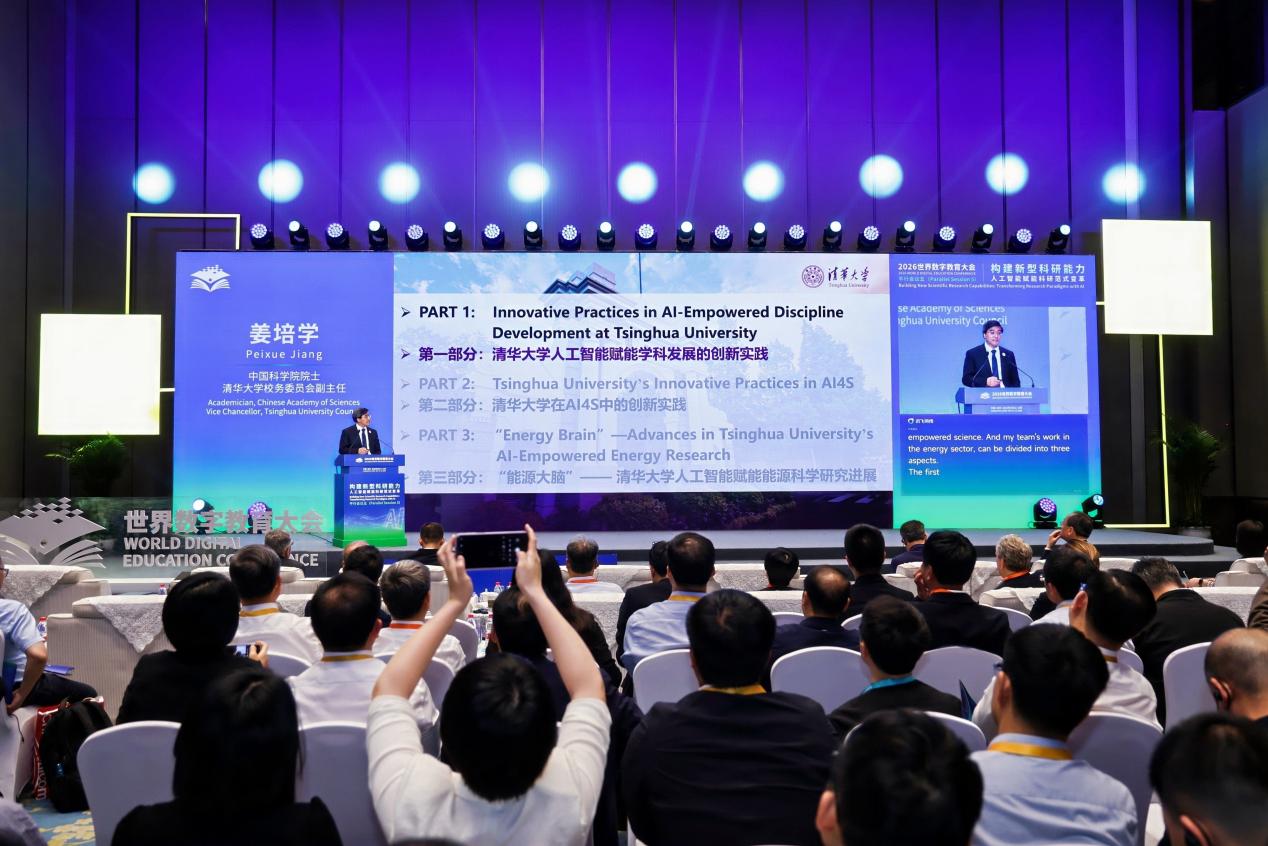
Keynote speeches
The Opening Ceremony of the conference was hosted by Zhou Dawang, director of the Department of Science, Technology and Informatization, Ministry of Education. Xu Qingsen, vice minister of Education; Zhang Xuewei, vice-chairman of Zhejiang Provincial Committee of the Chinese People's Political Consultative Conference; and Vladimir Norov, chairman of Central Asian Association for Artificial Intelligence and former minister of Foreign Affairs, Republic of Uzbekistan delivered opening remarks, emphasizing the significant importance of artificial intelligence in promoting a transformation of the research paradigm. The Keynote Speech session was chaired by Irwin King, pro-vice-chancellor of The Chinese University of Hong Kong. Efim Zelmanov, Fields Medalist, foreign academician of Chinese Academy of Sciences, and member of U.S. National Academy of Sciences; Zhang Jin, academician of Chinese Academy of Sciences and vice president of Peking University; Jon Garibaldi, pro-vice-chancellor of the University of Nottingham and provost of the University of Nottingham Ningbo China; and Jiang Peixue, academician of Chinese Academy of Sciences and vice chancellor of Tsinghua University Council, delivered keynote speeches. They shared cutting-edge insights on leveraging artificial intelligence to build new research capabilities and advance research paradigms in areas such as materials science and energy.
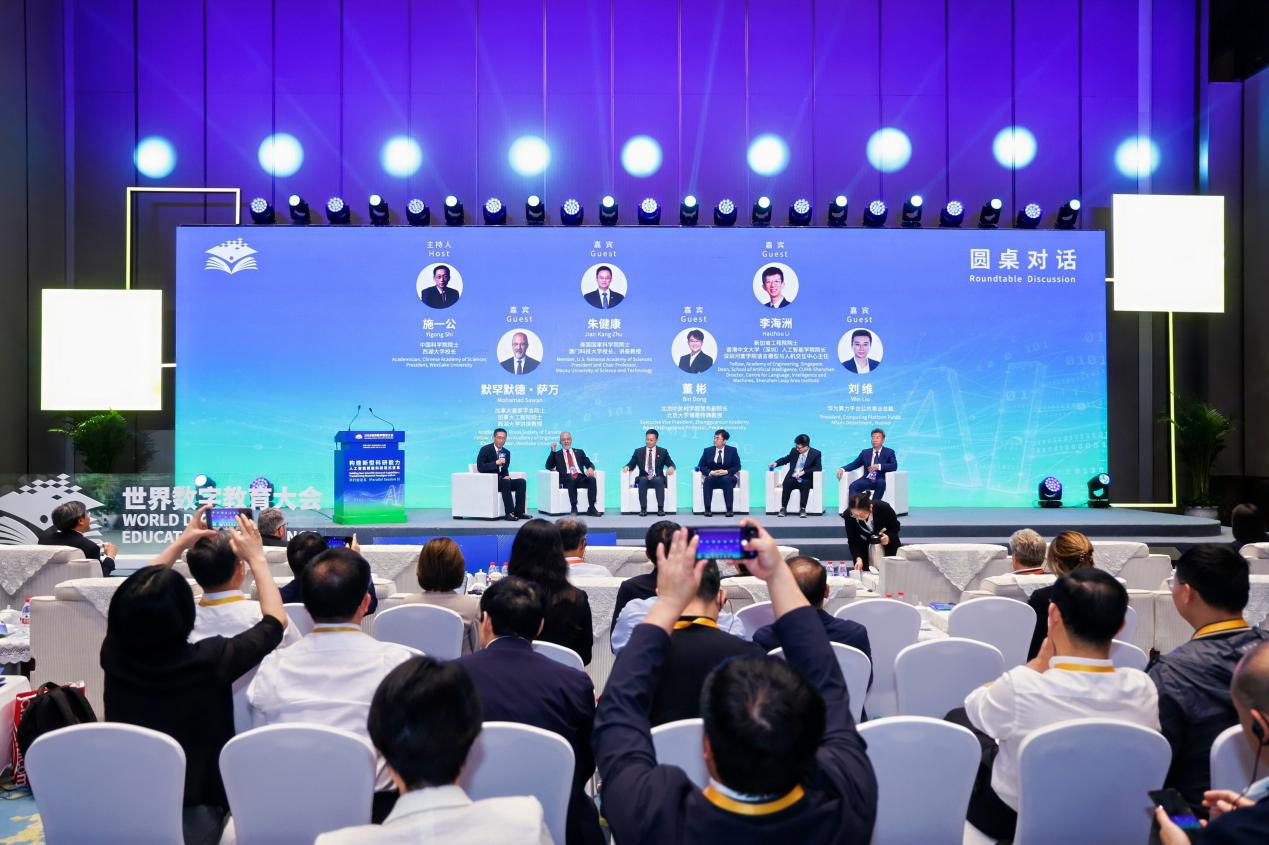
Roundtable discussion
The session was followed by a Young Scientist Forum and a roundtable discussion, providing high-level interdisciplinary exchanges on the future trends of AI-enabled scientific research from multiple perspectives.
The Research Highlights session, chaired by Jiang Peixue, showcased a series of the latest AI-powered tools, models, and agents for scientific research, demonstrating the powerful role of artificial intelligence in transforming research paradigms.
The parallel session featured presentations by leading scientists, a roundtable discussion, and research highlights, showcasing a vision of research paradigms shifting from “tool-assisted” approaches to “autonomous intelligence” through artificial intelligence. Covering fields such as life sciences, materials and energy, wireless communications, and smart healthcare, the session presented scientific intelligence innovations that represent major breakthroughs in China’s development and application of AI-powered research tools, and offer a Chinese approach to advancing international collaboration in scientific intelligence research.
On May 12, the closing ceremony of the 2026 World Digital Education Conference unveiled a number of major achievements.
These outcomes were jointly initiated and compiled with in-depth participation from Tsinghua University, and organized by the AI Open Alliance and the World Digital Education Alliance. The announced achievements include Ethics of Artificial Intelligence in Education: a Reference Framework; Artificial Intelligence Application System in Education; and, Fundamental Elements of AI-Empowered Smart Campus.
Writers: Li Han, Yue Qinrong
Editor: John Paul Grima