In 1926, Tsinghua University established its first 17 departments, including the Department of Economics. Over the past 100 years, Tsinghua’s economic scholars have devoted themselves to the Chinese nation, through its ups and downs and gradual evolution. The Department of Economics has consistently sought pathways to national salvation and public well-being in times of crisis, explored strategies for national strength and shared prosperity during the era of reform and opening up. With determination and dynamism, it is advancing toward world-class excellence while upholding fundamental principles and fostering innovation to propel the development of economics research in China.
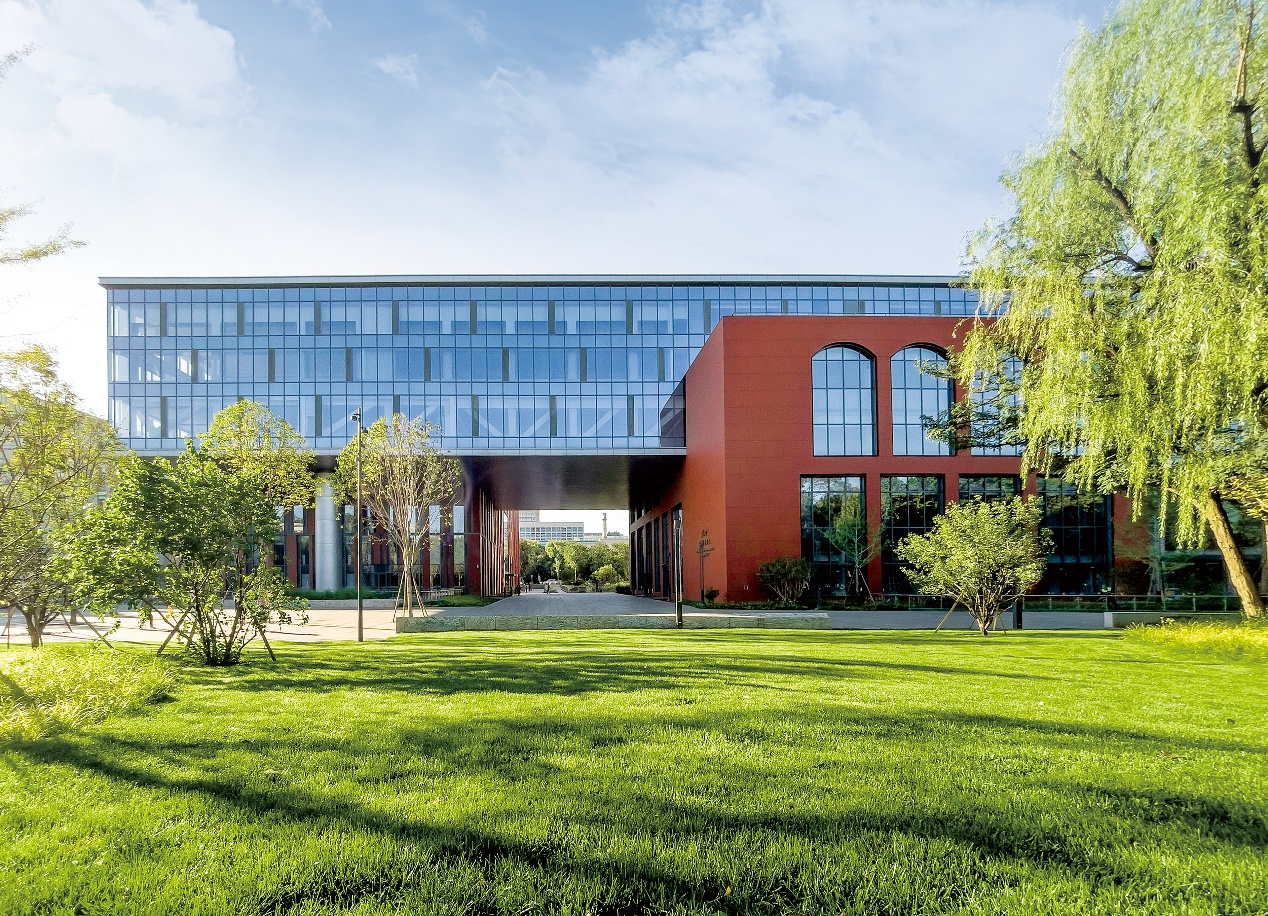
School of Economics and Management, Tsinghua University
I. A Century of Academic Legacy, Unwavering Commitment
When the department was founded, China was mired in political turmoil with a backward economy. Tsinghua’s economists sought to use modern economic knowledge and methodologies to solve the country’s problems and link their academic studies to social reform and nation building. They proposed “nurturing talents, reforming social and economic institutions, and developing the national economic capability” as the ultimate goals of education and research. The department initially offered two categories of program – economics and commerce – allowing the study of China’s society and economy while also closely following the country’s enterprises.
In 1928, Chen Daisun was appointed as the dean of the department. He remained in the role until Tsinghua underwent reorganization in 1952. Under his leadership, the department experienced fast growth for more than two decades. Chen developed an educational concept that “attached equal importance to theory, facts and techniques.” He believed that students need to grasp theory well, have a deep understanding of China’s actual situations and acquire the skills necessary for doing economic work. The Department of Economics offered courses on economic basics, public finance, monetary economics, China’s history of economic thought, and others. At the same time, it trained its students in quantitative methods such as statistics, accounting and foreign exchange.
In 1979, Tsinghua University established the Department of Economics, Management and Engineering. In 1984, it founded the School of Economics and Management (Tsinghua SEM). One year later, it restored the Department of Economics. Over the years, the university has undergone dramatic transformation. Its Department of Economics has evolved into Tsinghua SEM, with a mature economic discipline established. But it has never abandoned the goal of using economics to serve the country and improve the people’s lives.
II. Rooted in China, Serving the Nation
After China pivoted toward rebuilding its economy, Tsinghua started to reform its educational concepts and its approach to developing academic disciplines. In the 1980s, it became the first higher education institution in China to name an economic course “Western Economics.” In the 1990s, the Department of Economics decided to develop an economic discipline with its own characteristics, and adopted this as its policy. It chose quantitative economics, an area that it excelled at, to make a breakthrough. Eventually, it was accredited to grant master’s degrees and doctoral degrees in quantitative economics. And quantitative economics was recognized by the central government as a national key discipline.
In 2006, the department was accredited to grant doctoral degrees in theoretical economics and applied economics, two first-level disciplines. From this base, it identified its own research fields and formed a mature talent development system. As a result, Tsinghua managed to further modernize its economic education and research, and helped China upgrade its economic research methodologies and talent development system.
Tsinghua has long sought to tie its economic research to state governance practices, and a number of teachers from the university have been involved in key national policy consulting and planning. They have offered proposals on topics including economic structural optimization and governance systems, income distribution and social security, the coordination between state-owned and private sectors, macroeconomic regulation and control, financial reform, educational reform, innovation, fostering startups, sustainable development and five-year planning, among many others. From research-based conclusions on China’s economic growth potential, to multiple pieces of research on five-year planning, to their sustained involvement in key reform-themed policy consulting, Tsinghua’s economic scholars have shown a consistent attitude. For them, economics is not about abstract theorizing; instead, it is an important tool that should be used to understand the world, to understand China and to serve the people.
III. Bridging China and the West, Integrating Arts and Sciences
Tsinghua has facilitated the modernization of the academic system and research methodologies for Chinese economists. Its contributions to the modernization of economic research and education in China lay in quantification which helped develop research methodologies, emphasis on technique training which strengthened the foundation of the economic discipline, and development of textbooks which helped other higher education institutions in China to improve their economic teaching.
Since the 1990s, textbooks compiled by Li Zinai and other scholars, such as Econometrics: Methodologies and Application and Advanced Econometrics, have been adopted by numerous higher education institutions across China. With quantitative economics recognized by the state as a national key discipline, Tsinghua found itself occupying an important position in the Chinese academic community for the quantification and standardization of economic studies.
Around 2002, Tsinghua SEM began to bring in highly accomplished scholars from prestigious universities around the world. This measure was to align its faculty development, doctoral training, and academic evaluation with international standards. Tsinghua has expanded the scope of economic research into microeconomics, macroeconomics, econometrics, finance, fiscal policy, development, industrial organization, labor economics, environmental economics and digital economy, among some others. It lays equal emphasis on economic theory and application, and uses international standards to study China’s issues. It has produced a number of world-class scholars. Taking the Departments of Economics and Finance at Tsinghua SEM as an example, more than 40% of faculty members have been selected for national high-level talent programs.
Tsinghua SEM puts talent development at the center of its discipline development effort, and has steadily improved its talent development strategy and optimized its curriculum design. In 2007, the school added the economics and finance program, an undergraduate program that was designed to integrate liberal education with personality development, and blazed a trail for nurturing top innovative talents in the fields of economics and management. From 2006 to 2020, the Department of Economics’ secondary major program produced nearly 3,000 high-level interdisciplinary talents who were proficient in both economics and a second discipline.
In 2022, Tsinghua SEM launched the Tsinghua Xuetang Economics Program combining economics and social science. This program is designed to produce top economic scholars who are proficient in economic analysis methods, have a deep understanding of China’s actual situations, have the ability to do frontier research, and can come up with original ideas. At the same time, the school has improved and promoted its Tsinghua University-Chinese University of Hong Kong dual undergraduate degree program in economics. In addition, it has started the Dual Degree Program in Computer Science and Finance for undergraduates, and the Master of Digital Economy program. In short, Tsinghua’s economic scholars have been pursuing innovation in frontier research, interdisciplinary integration and serving the national strategy.
Tsinghua has made significant achievements in economic education and research. Qian Yingyi and Bai Chong-En received the Tsinghua New Centennial Teaching Achievement Awards. The econometric course taught by Li Zinai, Pan Wenqing and others, and the principles of economics course taught by Qian Yingyi, Zhong Xiaohan and others were recognized by the state as the national top-level courses. Over the past few years, Tsinghua has made a great leap in economic research, academic publications and global impact. In 2025, Tsinghua climbed to 18th place globally in the fields of economics and econometrics in the QS World University Rankings. The same year, it ranked sixth in the business and economics fields in the World University Rankings by Times Higher Education. It saw a significant increase in the number of published high-quality English research papers, and many research breakthroughs by Tsinghua scholars were published in top international journals. A number of Tsinghua professors have been appointed as editors or editorial board members by major academic journals in China and abroad. The influence of China Journal of Economics, published by Tsinghua, is increasing and it is developing into a major academic publication in China.
A century ago, the contribution of Tsinghua’s economics discipline lay in introducing the methods and ideas of modern economics into China’s higher education. Today its value lies in advancing Chinese economics from the “canonical” to the “frontier,” from “learning from the world” to “engaging in dialogue with the world,” and from “applying existing theories to explain China” to “grounding research in China’s practice while contributing new knowledge to the world.”
Since 2017, Tsinghua SEM has led the establishment of the China Economics Annual Conference and China Job Market, which has grown into one of the largest global faculty recruitment platforms in economics and finance. In the same year, the National Bureau of Statistics–Tsinghua Data Research Center was founded as the first microdata laboratory jointly established by the National Bureau of Statistics and a university, unlocking the research value and broader social benefits of statistical data. In addition, through initiatives such as the Public Finance Summer School hosted by the National Institute for Fiscal Studies at Tsinghua University and the Quantitative History Workshop organized by the Institute of Economics at the School of Social Sciences, Tsinghua’s economics discipline continues to introduce frontier research to early-career scholars nationwide, providing vital public resources for the advancement of the field.
In terms of engaging with the global academic community, Tsinghua’s economics discipline has hosted a series of high-level conferences, including the “Growth and Institutions” Conference, the Conference on High-Dimensional Econometrics and Machine Learning, and the China Summer Economics Conference, gradually building internationally influential platforms for scholarly exchange. In contributing new knowledge, Tsinghua economic scholars have continuously expanded the frontiers of research on the Chinese economy. The work of Qian Yingyi on transition economies, higher education reform, and the relationship between government and the rule of law; Bai Chong-En on economic systems and structures, ownership reform, and China’s growth potential; and Li Daokui on the relationship between government and markets has all had far-reaching impact.
Tsinghua’s economics discipline aspires to more than improvements in rankings and publication counts. It seeks, through a synthesis of Chinese and Western traditions and an integration of the humanities and sciences, to firmly ground frontier theories in China’s realities, and thereby cultivate an academic ecosystem characterized by original thought and an independent knowledge system.
IV. Anchored in China, Engaging the World
We have now entered a critical stage of development. We’re undergoing high-quality development and technological transformation, and facing profound changes in the global landscape. This situation provides an unprecedented opportunity and also raises the bar for economic education and research.
Looking ahead, Tsinghua’s economics discipline bears the historic mission of advancing toward world-class excellence. It must continue to be guided by strong Party leadership, foster a culture of professional integrity and excellence in teaching, and build broad consensus and momentum to ensure a strong start to the 15th Five-Year Plan period—thereby driving the discipline to reach new heights.
Tsinghua’s economics discipline will continue to apply world-class standards to its basic research and enhance its creativity in major research areas such as econometrics, digital economy, growth and political systems, and development-led globalization. It will focus on the actual situations of China, and turn Chinese-style modernization, high-standard opening-up, e-governance, the protection of people’s livelihood, green transition and other major issues into globally impactful research supported by sound theory and solid evidence. It will continue to help China build its own economic knowledge system with Chinese characteristics, and enable the country to use more powerful and convincing narratives to articulate its own experience, path for development and wisdom on the global stage.
Editors: Li Han, John Paul Grima