Wildland fires are significant sources of organic compounds, but traditional global fire emission inventories only include primary organic aerosols (POA) and volatile organic compounds (VOCs) and lack intermediate-volatility and semivolatile organic compounds (IVOCs and SVOCs), which could underestimate the environmental impact of wildland fires.
Recently, Professor Shuxiao Wang’s group from the School of Environment at Tsinghua University developed a global wildland fire organic emission inventory (1997–2023) with full-volatility coverage using volatility-binned and chemically specific emission factors by vegetation type. The study reveals that, around the world, wildfires and prescribed burns (i.e., wildland fires) could emit substantially more gases, including ones that contribute to air pollution, than previously thought.
On December 29, 2025, the study was published in ACS’ Environmental Science & Technology under the title “Global Wildland Fire Emissions of Full-Volatility Organic Compounds from 1997 to 2023”. The paper was selected as a supplementary journal cover.
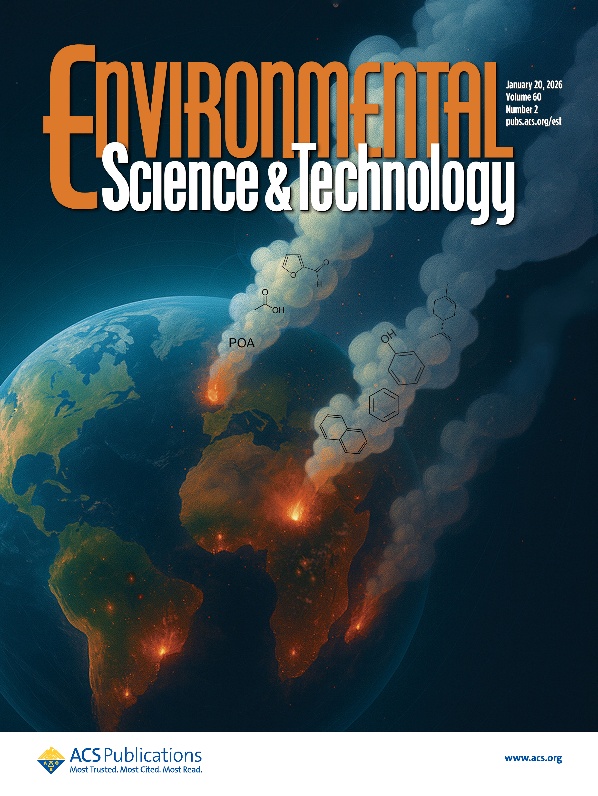
Figure 1. The paper was selected as a supplementary journal cover.
Each year, large swaths of forests, grass and peat burn in wildfires, releasing a complex mix of water vapor, ash and carbon-based compounds into the air. However, most studies assessing wildland fire emissions overlook IVOCs and SVOCs because of their large number, which makes it hard to measure these compounds. Shuxiao Wang’s group took IVOCs and SVOCs emissions along with VOCs into consideration to offer better insight into wildland fires’ impact on air quality, health and climate.
First, the researchers accessed a database of the burned land area for global forest, grass and peatland wildland fires from 1997 to 2023. They also collected data on the VOCs, IVOCs, SVOCs, and other extremely low volatility organic compounds emitted as each vegetation type burns. For vegetation types without field measurements, they relied on laboratory experiments to predict the organic compounds released. Then, the team combined these datasets and calculated annual emissions around the world.
Altogether, the researchers estimated wildland fires released an average of 143 million tons of airborne organic compounds each year of the study. This amount is 21% higher than earlier estimates, suggesting that wildland fire emissions, specifically the IVOCs and SVOCs, could cause more air pollution than previously thought.
Comparing wildland fire emissions to their earlier estimate of human activities that release airborne compounds , the researchers found that the human-caused emissions were greater overall, but both sources released equivalent amounts of IVOCs and SVOCs. Additionally, multiple emission hotspots for both wildfire and human activity emerged from the comparison: Equatorial Asia, Northern Hemisphere Africa and Southeast Asia. The researchers say these regions’ air pollution challenges are complex, requiring different strategies to reduce emissions from fires and human activities.
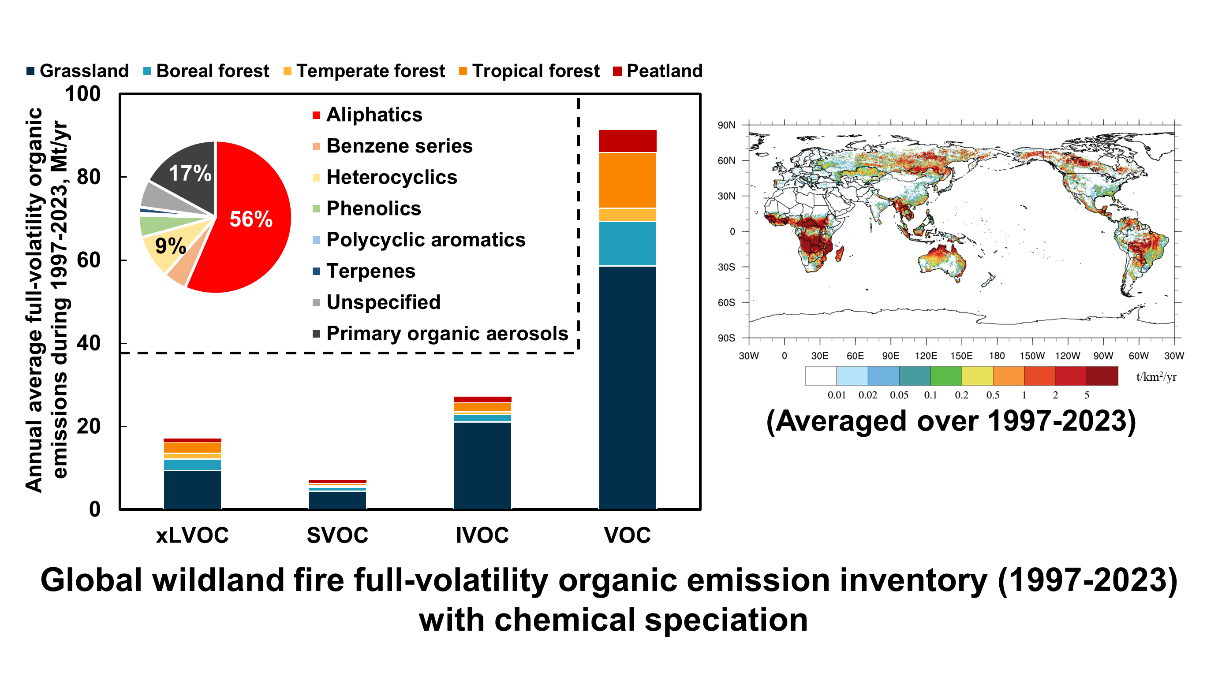
Figure 2. Global wildland fire full-volatility organic emission inventory (1997-2023) with chemical speciation
Lynyin Huang, a PhD candidate at the School of Environment, Tsinghua University, is the first author. Professor Shuxiao Wang is the corresponding author. Co-authors include associate professor Bin Zhao, assistant professor Yicong He, Dr. Mingchen Ma, Dr. Dejia Yin, and associate professor Qingru Wu from the School of Environment, Tsinghua University, and Dr. Xing Chang from Transport Planning and Research Institute, Ministry of Transport.
The research was supported by the National Natural Science Foundation of China, National Key R&D Program of China, the Samsung Advanced Institute of Technology, and the Center of High Performance Computing at Tsinghua University.
Full text:
http://pubs.acs.org/doi/abs/10.1021/acs.est.5c10217
Editor: Li Han