The APEC University Leaders’ Forum convened November 15 to 16 in Shenzhen, centered on the theme “Open, Innovative, Collaborative: Universities as Catalysts for Asia-Pacific’s Prosperous Future.”
The forum was jointly organized by Tsinghua University and The Chinese University of Hong Kong, Shenzhen (CUHK-Shenzhen), with the support of the Association of Pacific Rim Universities (APRU).
Li Luming, president of Tsinghua University; Dennis Lo, vice-chancellor and president of The Chinese University of Hong Kong (CUHK) and chairman of the Governing Board of CUHK-Shenzhen; Nancy Ip, president of The Hong Kong University of Science and Technology (HKUST) and vice-chair of APRU; Liu Yong, deputy director-general of the Department of International Cooperation and Exchanges of China’s Ministry of Education; and Eduardo Pedrosa, executive director of the APEC Secretariat, attended the opening ceremony and delivered remarks.
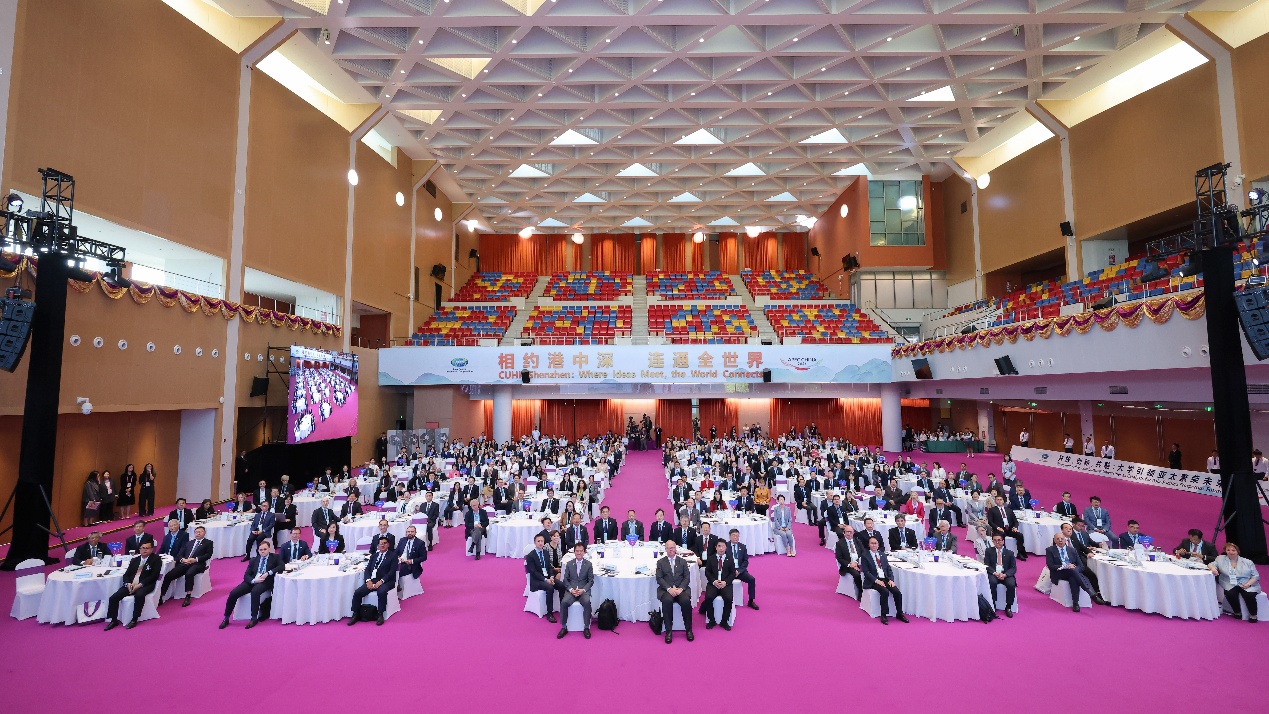
Participants take part in the opening ceremony of the APEC University Leaders’ Forum.
In his opening remarks, Li Luming welcomed guests on behalf of Tsinghua University. He highlighted the vital role of universities in nurturing innovative talent in the AI era, driving scientific breakthroughs and social progress, addressing shared challenges, and fulfilling global responsibilities.
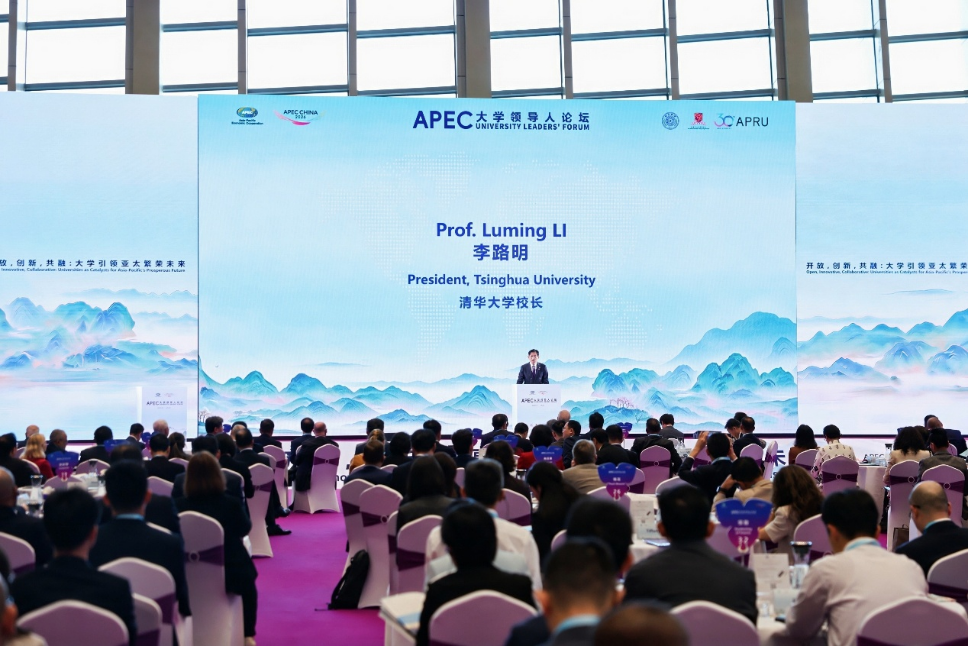
Li Luming addresses opening ceremony of the APEC University Leaders’ Forum.
“Tsinghua University is working to reshape its talent cultivation system to develop innovative leaders equipped with global competence, humanistic literacy, and critical thinking for the AI era. Tsinghua University is also advancing high-level international scientific research cooperation, promoting AI-driven paradigm shifts in research, and accelerating efforts to translate research breakthroughs into practical application. Furthermore, Tsinghua is deepening its Global Strategy to contribute its wisdom and solutions to jointly addressing global challenges and advancing the building of a community with a shared future for mankind,” Li said. He called for joint efforts to advance peace and development in the Asia-Pacific and beyond.
Dennis Lo traced Shenzhen’s remarkable growth alongside the development of its higher education sector. “Universities are engines of innovation, driving efforts to address global challenges,” he said. He hoped universities would deepen cooperation and translate the shared vision into lasting well-being for the world.
Nancy Ip said that the significance of the forum is to unite universities to jointly address regional challenges. She noted that universities must help shape this transformation through academic rigor, ethical responsibility and a commitment to the public good, working closely with governments, industry and wider society.
Liu Yong put forward three recommendations for strengthening higher education cooperation across the Asia-Pacific: harnessing AI for people-centred education and talent development; deepening openness and collaboration through the APEC platform to drive regional high-quality development; and fostering exchanges and mutual learning among civilizations.
Eduardo Pedrosa stressed that trust and open dialogue are more important than ever. Such dialogue, he noted, must extend beyond policymakers to engage the business, education and research communities. He underscored the vital role of universities in promoting stronger collaboration in science, technology and skills. He invited university leaders to share insights on how higher education can support APEC’s work in areas such as AI, trade, digitization, and food and energy resilience.
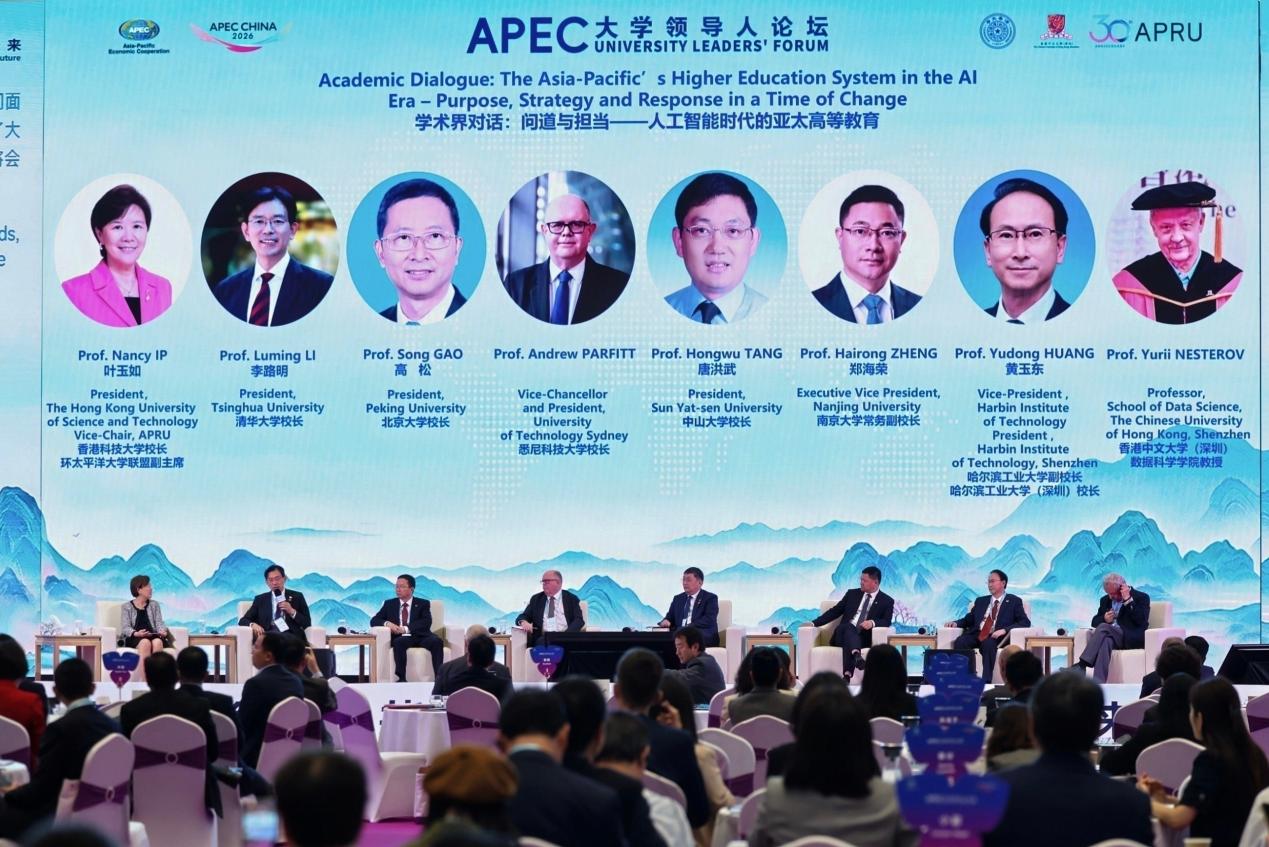
Panelists speak during the academic dialogue session at the APEC University Leaders’ Forum.
Following the opening ceremony, the forum continued with two dialogue sessions from academic and industrial perspectives: “The Asia-Pacific’s Higher Education System in the AI Era – Purpose, Strategy and Response in a Time of Change” and “Building a Collaborative Innovation Ecosystem for Government, Industry, Academia and Research in the Asia-Pacific.” The discussions explored the role of universities and the value of collaboration in a world being profoundly reshaped by AI and geopolitical shifts.
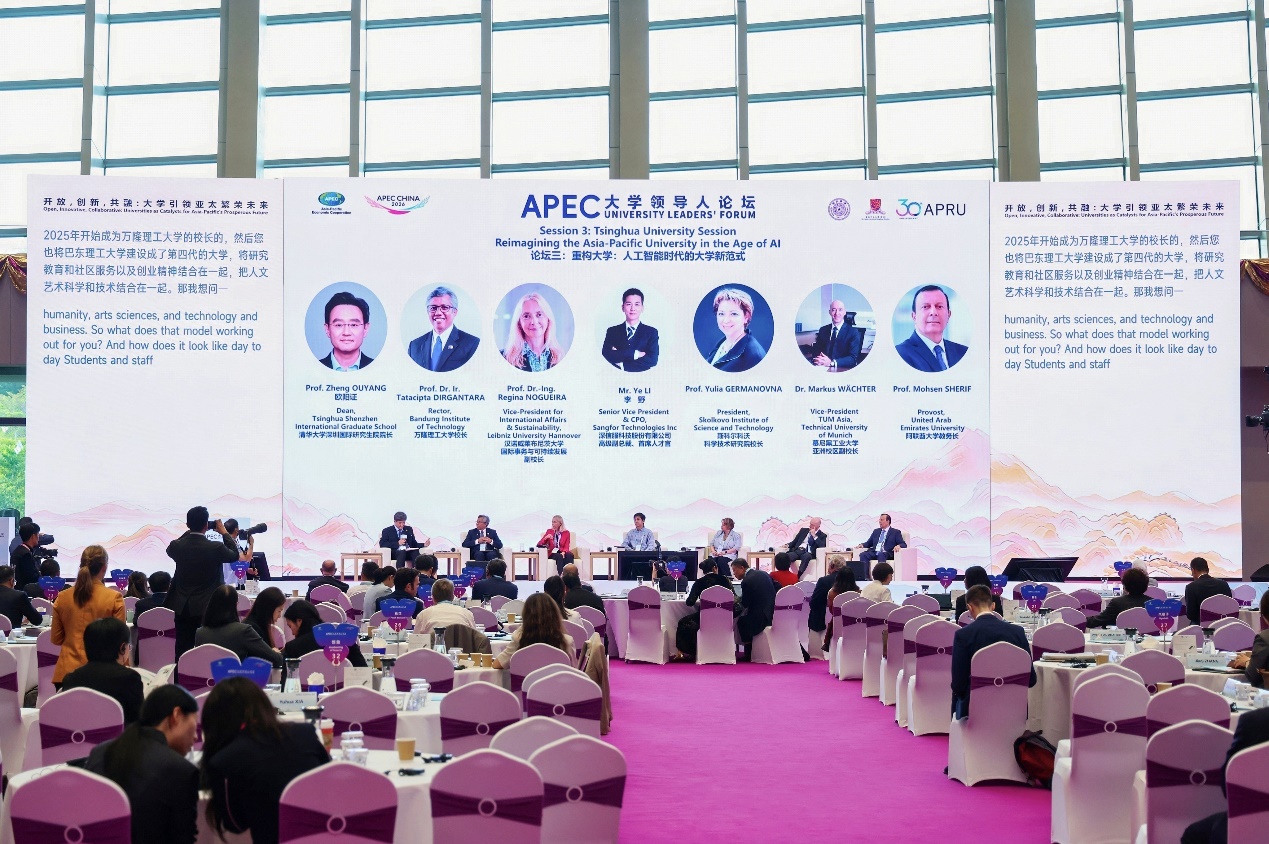
Speakers share insights during a thematic session.
Four thematic sessions were held concurrently. The discussions covered four interconnected themes: university-led innovation, the role of the humanities amid technological change, the evolving model of the university, and the continuity of AI education from secondary school through university.
Xu Yangsheng, president of CUHK-Shenzhen; Thomas Schneider, chief executive of APRU; and Yang Bin, vice chairman of Tsinghua University Council, delivered closing remarks.
Xu Yangsheng said that “Universities should create opportunities for students to develop these capacities through real engagement with the world, through interdisciplinary learning and human connection.”
Thomas Schneider emphasized the need for universities to adapt to profound changes in society and industry, deepen cooperation to provide foundation for regional innovation and prosperity.
Yang Bin noted that universities can play an important role in shaping an Asia-Pacific defined by openness, mutual trust, and common prosperity,” adding that Tsinghua looks forward to deepening its partnerships and translating the connections strengthened here into lasting contributions to the Asia-Pacific and beyond.
As an event of the 2026 APEC “China Year,” the forum brought together more than 300 attendees from 61 universities in 24 countries and regions.
The APEC University Leaders’ Forum brings together university leaders, policymakers, and industry innovators. It aims to strengthen partnerships for knowledge creation and shape a more equitable, sustainable, and prosperous Asia-Pacific future.
Editors: Li Han, John Paul Grima