Sangwon Suh, Professor at the School of Environment, Tsinghua University, has been selected to serve on the GHG Protocol and ISO – Carbon Footprint of Products Standard ISO 14067 – Joint Working Group (JWG). This JWG was formed to harmonize two major international standards on product carbon footprints: one by the GHG Protocol and the other by ISO. Prior to this appointment, Professor Suh had already been serving as a member of the GHG Protocol Scope 3 Technical Working Group and Science-based Target Initiative Corporate Net-Zero Standard. Through this role, he will contribute to the coordinated update of international standards, drawing on his experience with organizational accounting frameworks (GHG Protocol Scope 3) and mitigation standards (SBTi) in the context of product carbon footprinting.
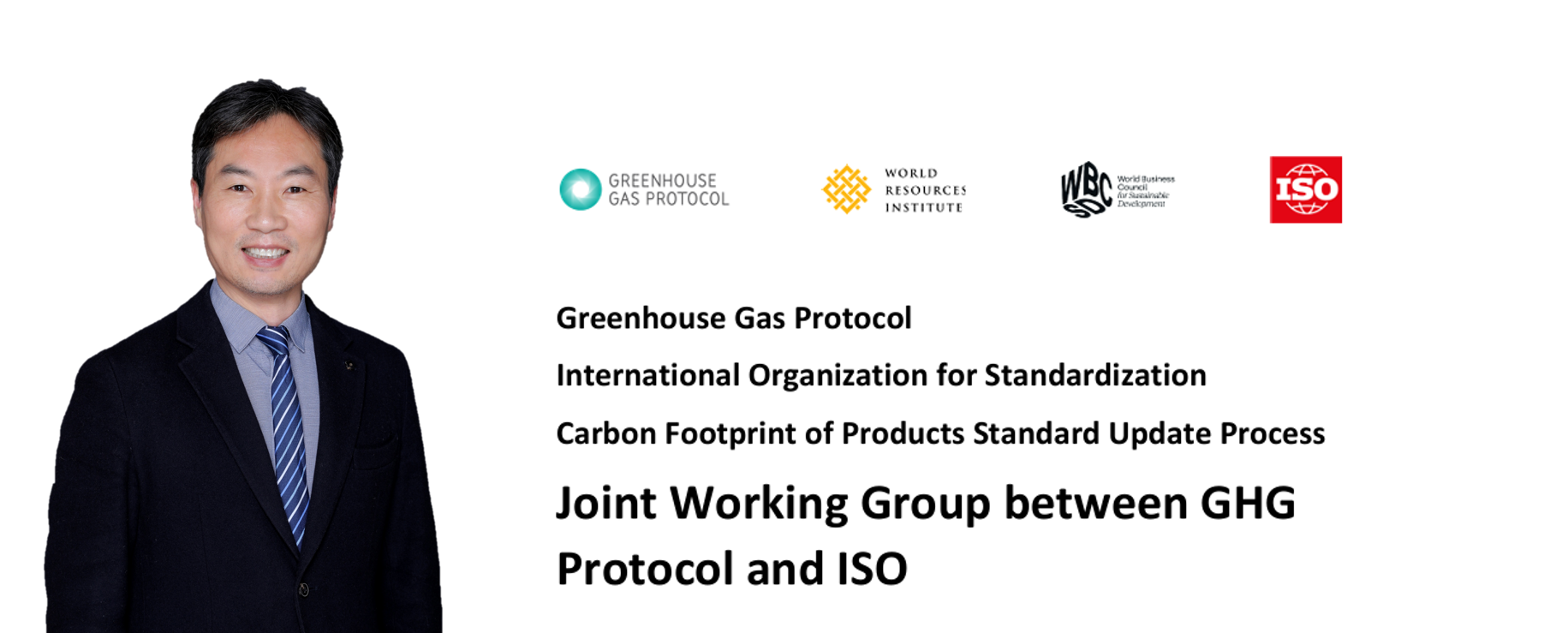
The Greenhouse Gas Protocol and the International Organization for Standardization represent two central pillars in greenhouse gas accounting standards. The GHG Protocol is the most widely used framework for organizational greenhouse gas accounting, particularly for corporate inventories and Scope 3 value chain emissions. ISO, through its 14040 and 14060 series of standards (including ISO 14067), provides internationally recognized methodologies for life cycle assessment and product carbon footprinting. While both systems address complementary aspects of emissions accounting, they have historically developed through separate governance and methodological traditions. This distinction has created challenges in aligning organizational and product-level accounting—especially where Scope 3 assessments depend on product-level data—leading to inconsistencies in practice and interpretation. The establishment of a Joint Working Group reflects an effort to better coordinate these frameworks in areas of overlap.
The Joint Working Group to which Professor Suh has now been appointed is a collaborative mechanism established by the GHG Protocol and the International Organization for Standardization (ISO) with the goal to harmonize product-level greenhouse gas accounting standards. According to its Terms of Reference, the JWG supports the development and revision of the Carbon Footprint of Products (CFP) Standard by bringing together experts nominated through the established procedures of both organizations. Professor Suh’s prior service in the Scope 3 Technical Working Group and his new appointment to the Joint Working Group demonstrate his continued commitment to translating decades of foundational research in life cycle assessment into practice through international standards.
Professor Suh joined Tsinghua University in January 2026. He is affiliated with the School of Environment and holds the title of Xinghua Chair Professor at the university. He is also involved in the Tiangong Initiative and the Tiangong Think Tank Center of the Tsinghua Suzhou Institute for Environmental Innovation. An internationally renowned industrial ecologist and a leading scholar in life cycle assessment (LCA), he has long been committed to advancing the core theories and methodologies of life cycle assessment, greenhouse gas accounting, and emissions mitigation, making important contributions to both academic development and international standards research.
In addition to his academic achievements, Professor Suh has extensive experience in industry practice. He founded VitalMetrics, a company focused on enterprise-level carbon accounting and environmental data services, which was later acquired by a Silicon Valley technology company, Watershed Technology Inc., where he continued to serve as Chief Scientist. He also co-founded a chemical process LCA data company in Germany, Carbon Minds GmbH. Throughout his career, Professor Suh has actively promoted carbon management and carbon neutrality practices grounded in high-quality scientific data and method, while advancing the application of life cycle assessment in industrial decision-making.