Fifty-three young scholars. Nineteen expert lectures. Seven team innovations. One shared ambition: to turn ideas into action for a more sustainable world.
From July 3 to 17, the School of Environment at Tsinghua University welcomed a highly selective international cohort to its 2026 International Summer School. Under the theme 'Carbon Neutrality and Environmental Protection,' the program combined advanced environmental learning, interdisciplinary teamwork, field-based discovery and cultural exchange.
Chosen from nearly 3,000 applicants, the 53 participants represented leading institutions in China and abroad, including the University of Oxford, the University of California, Berkeley, University College London, Imperial College London, Columbia University, Peking University, Renmin University of China, Nanjing University, Tongji University and Fudan University.

Participants and faculty at the opening of the 2026 International Summer School.
A global classroom for urgent challenges
At the opening ceremony on July 4, Dean Liu Shuming described the School of Environment as a globally connected center for environmental research and education. He highlighted the School's work across carbon neutrality, climate action, clean energy, the circular economy and sustainable development, and encouraged participants to make full use of the program to expand their international perspective and develop forward-looking ideas through cross-cultural collaboration.
Assistant Dean Zhang Xiaoyuan, who hosted the ceremony, placed the summer school within Tsinghua's broader effort to advance digital solutions for ecological civilization. Program lead Deng Bing then introduced the learning goals, schedule and innovation-project requirements, inviting students to explore frontier sustainability questions with curiosity, rigor and an open mind.
Across 19 specialist lectures, faculty from the School of Environment and the Tsinghua Suzhou Environmental Innovation Research Institute connected scientific progress with practical environmental action. The sessions ranged from clean-air and carbon-neutral pathways, sustainable wastewater treatment and global solid-waste management to sponge cities, aerosol science, soil remediation, low-carbon industrial parks, water and health, green fuels, plastic-pollution control, critical-metal recovery, engineered carbon sequestration and product carbon footprints across supply chains.
Seven teams, seven solutions
The program challenged students to move beyond listening and build solutions together. Working in interdisciplinary teams, participants repeatedly tested, discussed and refined their ideas before presenting seven innovation projects.
Their proposals addressed real-world environmental needs: AI-enabled water-quality monitoring, intelligent landfill management, food-waste governance, biological-resource matching, urban waste management, wastewater-system optimization and sustainable thermal management for buildings. The final presentations demonstrated not only technical creativity, but also the collaborative problem-solving skills required to turn promising concepts into practical pathways.

Student teams presented seven sustainability innovation projects developed during the program.
Beijing becomes a living laboratory
Learning continued beyond the campus. On July 6, students visited the State Key Laboratory of Iron and Steel Industry Environmental Protection to examine research on pollution reduction, carbon mitigation and resource recycling in one of the world's most important industrial sectors.
On July 8, a visit to BAIC Group's headquarters and off-road vehicle manufacturing base offered a closer look at industrial development, intelligent manufacturing and low-carbon technologies. The following day, students traveled to the Beijing Daxing Hydrogen Energy Demonstration Base, where they explored the hydrogen industry, emerging application scenarios and demonstration projects. Together, the visits showed how policy, engineering and industry can converge to accelerate environmental progress.

Technical Tour
Culture as a bridge
The summer school also created space for participants to experience Chinese culture through round-fan making, traditional Chinese painting, calligraphy and Hanfu. These hands-on activities brought students together in a different kind of classroom - one built around creativity, conversation and shared discovery - and strengthened understanding across cultures.

Participants explore Chinese arts and crafts through hands-on cultural activities.

A shared cultural experience gave students new ways to connect beyond the classroom.
A network for the future
By bringing together academic depth, team-based innovation, industry exposure and cultural exchange, the 2026 International Summer School offered more than a short-term program. It created an international learning community in which students could test ideas, learn from one another and see complex environmental challenges from new perspectives.
The School of Environment will continue to deepen international cooperation and cultivate young talent for global environmental governance. The relationships and ideas formed during these two weeks will travel far beyond Beijing - contributing fresh energy, international insight and youth-led solutions to the shared pursuit of sustainable development.

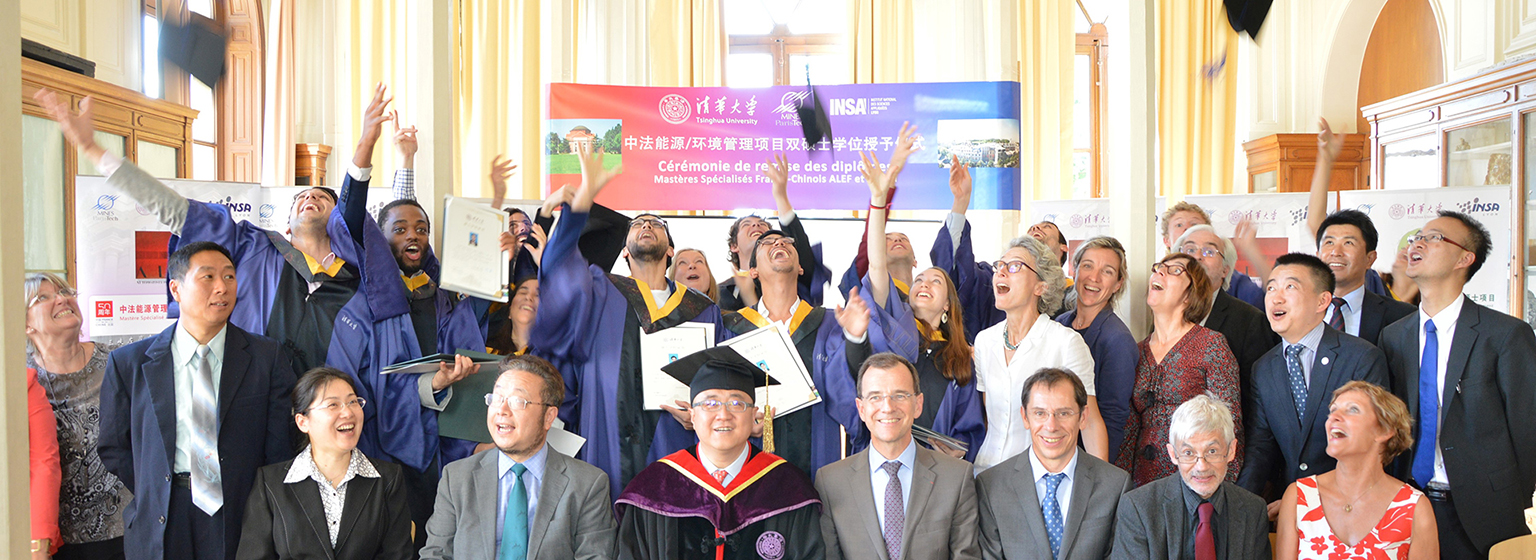
The 2026 cohort closes the program with new knowledge, new friendships and a shared commitment to sustainability.